
|
You entered: Moon
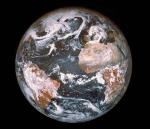 An Earth Ornament
25.12.1996
The Apollo 8 astronauts spent the 1968 Christmas Season in lunar orbit, returning with striking images of the Moon and Earth from space which inspired the world. While in lunar orbit...
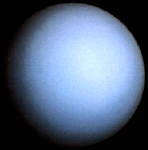 Uranus: The Tilted Planet
16.08.1995
This picture was snapped by the Voyager 2 spacecraft in 1986 - the only spacecraft ever to visit Uranus. Uranus is the third largest planet after Jupiter and Saturn. Uranus has many moons and a ring system.
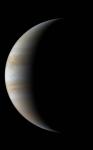 Farewell Jupiter
8.08.2001
Next stop: Saturn. The Cassini spacecraft, launched from Earth four years ago, has now swung past Jupiter and should arrive at Saturn in the year 2004. Pictured to the left is a parting shot from Cassini in January that would not have been possible from Earth: Jupiter showing a crescent phase.
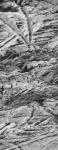 560 Kilometers Above Europa
3.03.1998
This is the closest photograph ever taken of Europa. Last December, NASA's spacecraft Galileo swept past the Jovian moon and took photographs which were released yesterday. Speculation that life-bearing oceans exist beneath Europa's surface caused NASA to put Galileo on orbits that approach Europa.
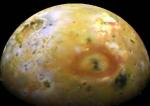 Io's Giant Volcano Pele
5.12.1996
Io has some very large volcanoes. One of the largest is evident near the center of the above photograph and named Pele, for the mythological Polynesian fire goddess. The Galileo spacecraft now orbiting Jupiter took this picture of Jupiter's most active moon in June, although it was released just last week.
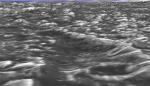 The Hills of Ganymede
23.12.1996
This computer generated 3D close-up view of Jupiter's large moon Ganymede was created using image data from NASA's Galileo spacecraft. Simulating stereo vision by combining two recent images recorded from different angles, 3 dimensional information was reconstructed for a section of Ganymede's surface.
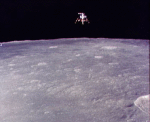 Apollo 12's Lunar Module Descends
7.10.1995
A few months after Apollo 11's historic Moon landing, Apollo 12 with commander Charles Conrad Jr., Command Module pilot Richard Gordan, and Lunar Module pilot Alan Bean returned for more geographic and scientific exploration.
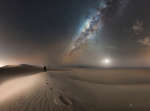 100 Steps Forward
15.09.2017
A beautiful conjunction of Venus and Moon, human, sand, and Milky Way is depicted in this night skyscape from planet Earth. The scene is a panorama of 6 photos taken in a moment near the end of a journey.
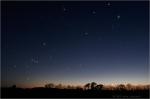 Constellation Construction
20.07.2006
This lovely twilight scene, recorded last April, finds a young crescent Moon low in the west at sunset. Above it, stars shine in the darkening sky but they too are soon to drop below the western horizon.
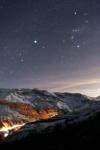 Alborz Mountains in Moonlight
3.02.2007
On January 25th, light from a first quarter Moon illuminated this dreamlike landscape looking across the rugged, snow-covered peaks of the Alborz Mountain Range in northern Iran. The stunning sky is filled with stars, including the yellow-tinged Betelgeuse at the shoulder of Orion.
|
January February March April May June July August September October |
|||||||||||||||||||||||||||||||||||||||||||||||||