
|
You entered: sky
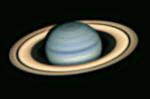 Saturn from Earth
2.09.1998
Saturn is the second largest planet in our Solar System. Saturn has been easily visible in the sky since history has been recorded. Galileo used one of the first telescopes in 1610 to discover Saturn's rings, which he first thought were moons.
 Ceci n est pas un Meteore
19.08.2006
To paraphrase Magritte, "This is not a meteor". It's not a picture of a meteor either, but it was taken during last weekend's peak of the Perseid Meteor shower. Skywatching with friends...
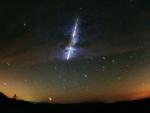 1998 Leonid Fireball
12.11.1999
Will this be the year? Last year's Leonid meteor shower did not produce the meteor storm many had hoped for. Still, it put on a dazzling show with many bright fireball meteors. For example, this Leonid fireball, photographed through light clouds, eerily flashed across the skies of Monteromano, Italy on November 17, 1998.
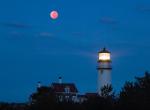 Eclipse with Lighthouse
10.03.2007
A red Moon rose over Cape Cod, Massachusetts, USA on March 3rd, immersed in Earth's shadow near the total phase of a lunar eclipse. This serene portrait of the eclipsed Moon in a dark blue twilight sky also features the Highland Lighthouse (aka Cape Cod lighthouse), another more locally familiar beacon in the night.
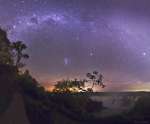 Iguacu Starry Night
14.05.2010
The arc of the southern Milky Way shone brightly on this starry night. Captured on May 4, in the foreground of this gorgeous skyview is the rainforest near the spectacular Iguaçu Falls and national park at the border of Brazil and Argentina.
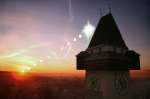 Sunrise, Moonrise
6.01.2011
For many Europeans, the Sun and New Moon rose together on January 4 in a partial solar eclipse. Arriving close on the heels of the new year, it was the first of a series of four(!) partial solar eclipses due in 2011.
 Globular Star Cluster 47 Tuc
16.01.2011
Globular star cluster 47 Tucanae is a jewel of the southern sky. Also known as NGC 104, it roams the halo of our Milky Way Galaxy along with some 200 other globular star clusters.
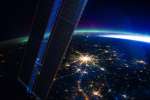 Yuri s Planet
12.04.2012
On another April 12th, in 1961, Soviet cosmonaut Yuri Alexseyevich Gagarin became the first human to see planet Earth from space. Commenting on his view from orbit he reported, "The sky is very dark; the Earth is bluish. Everything is seen very clearly". To celebrate, consider this recent image from the orbiting International Space Station.
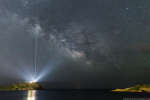 The Milky Way over the Temple of Poseidon
8.06.2015
What's that glowing in the distance? Although it may look like a lighthouse, the rays of light near the horizon actually emanate from the Temple of Poseidon at Cape Sounion, Greece. Some temple lights are even reflected in the Aegean Sea in the foreground.
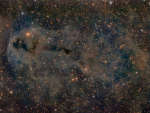 Lynds Dark Nebula 1251
30.09.2016
Stars are forming in Lynds Dark Nebula (LDN) 1251. About 1,000 light-years away, the dusty molecular cloud is part of a complex of dark nebulae mapped toward the Cepheus flare region, drifting above the plane of our Milky Way galaxy.
|
January February March April May June July August September October |
|||||||||||||||||||||||||||||||||||||||||||||||||