
|
You entered: dark
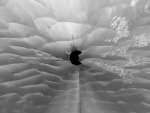 Martian Dunes and the Shadow of Opportunity
24.03.2009
Human made robots continue to roll across the surface of Mars. Both Opportunity and its sister rover Spirit are in their sixth year on Mars, exploring the red planet for years longer than original expectations.
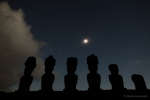 Easter Island Eclipse
14.07.2010
Makemake, a god in Easter Island mythology, may have smiled for a moment as clouds parted long enough to reveal this glimpse of July 11's total solar eclipse to skygazers. In the foreground...
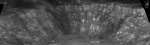 At the West Wall of Aristarchus Crater
17.02.2012
Aristarchus Plateau is anchored in the vast lava flows of the Moon's Oceanus Procellarum. At the plateau's southeastern edge lies the spectacular Aristarchus Crater, an impact crater 40 kilometers wide and 3 kilometers deep.
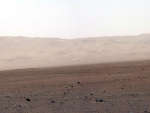 Curiosity on Mars: A Wall of Gale Crater
15.08.2012
If you could stand on Mars, what would you see? The above image is a digitally re-colored approximation of what you might see if the above Martian landscape had occurred on Earth. Images from...
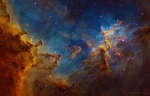 Melotte 15 in the Heart
18.10.2014
Cosmic clouds form fantastic shapes in the central regions of emission nebula IC 1805. The clouds are sculpted by stellar winds and radiation from massive hot stars in the nebula's newborn star cluster, Melotte 15.
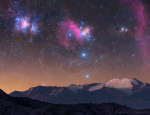 Orion over Argentine Mountains
9.06.2020
Do you recognize the constellation of Orion? It may be harder than usual in today's featured image because the camera has zoomed in on the center, and the exposure is long enough to enhance nebulas beyond what the unaided human eye can see.
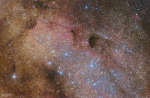 Messier 24: Sagittarius Star Cloud
7.04.2022
Unlike most entries in Charles Messier's famous catalog of deep sky objects, M24 is not a bright galaxy, star cluster, or nebula. It's a gap in nearby, obscuring interstellar dust clouds that allows a view of the distant stars in the Sagittarius spiral arm of our Milky Way galaxy.
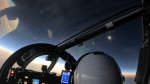 APOD: 2026 September 5 Б Chasing the Moon s Shadow
5.09.2026
Chasing the shadow of a New Moon, NASAБs WB-57F high altitude research aircraft took to the skies off the coast of Iceland on August 12 to observe a total solar eclipse. At 50,000 feet the aircraft was piloted along the precisely determined path of totality to maximize its time in the MoonБs shadow.
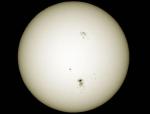 AR 9169: A Large Sunspot
25.09.2000
One of the largest sunspots in recent years is now crossing our Sun. Dominating active region AR 9169, the sunspot is the large dark complex visible below (west) and right of center in the above photograph of our Sun taken last Thursday.
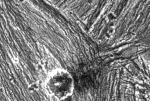 Ganymede: A Really Groovy Moon
11.07.1996
Ganymede's surface is a wrinkled mess. As large ice-sheets shift on the moon's surface, parts of the surface buckle causing high ridges, deep furrows, and parallel grooves. This photo, taken by the Galileo spacecraft currently orbiting Jupiter, was released yesterday. The large circular feature near the picture bottom is a large impact crater.
|
January February March April May June July August September |
|||||||||||||||||||||||||||||||||||||||||||||||||