
|
You entered: Chandra
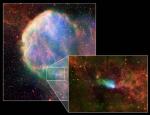 IC 443: Supernova Remnant and Neutron Star
2.06.2006
IC 443 is typical of the aftermath of a stellar explosion, the ultimate fate of massive stars. Seen in this false-color composite image, the supernova remnant is still glowing across the spectrum, from radio...
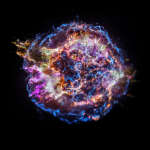 Recycling Cassiopeia A
28.12.2017
Massive stars in our Milky Way Galaxy live spectacular lives. Collapsing from vast cosmic clouds, their nuclear furnaces ignite and create heavy elements in their cores. After a few million years, the enriched material is blasted back into interstellar space where star formation can begin anew.
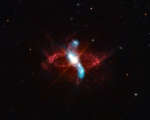 Symbiotic R Aquarii
29.06.2017
A long recognized naked-eye variable star, R Aquarii is actually an interacting binary star system, two stars that seem to have a close, symbiotic relationship. About 710 light years away, it consists of a cool red giant star and hot, dense white dwarf star in mutual orbit around their common center of mass.
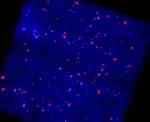 X-Rays from the Galactic Plane
14.08.2001
In February 2000, the orbiting Chandra X-ray Observatory spent 27 hours staring into the plane of our Milky Way galaxy. Its target was a spot in the small constellation Scutum, within the Milky Way's zone of avoidance where galactic gas and dust clouds block visible light, making a poor window for optical telescopes.
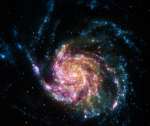 21st Century M101
13.07.2012
One of the last entries in Charles Messier's famous catalog, big, beautiful spiral galaxy M101 is definitely not one of the least. About 170,000 light-years across, this galaxy is enormous, almost twice the size of our own Milky Way Galaxy.
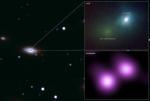 SN 2006GY: Brightest Supernova
10.05.2007
The stellar explosion cataloged as supernova SN 2006gy shines in this wide-field image (left) of its host galaxy, NGC 1260, and expanded view (upper right panel) of the region surrounding the galaxy's core.
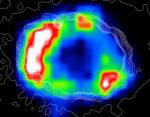 X-Ray Ring Around SN1987A
12.05.2000
This false-color image from the Chandra X-ray Observatory reveals a one light-year diameter ring of hot, ten million degree plasma. It is one of the most detailed X-ray images of the expanding blast wave from supernova 1987A (SN1987A).
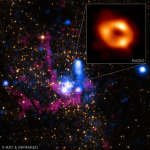 The Milky Way s Black Hole
13.05.2022
There's a black hole at the center of the Milky Way. Stars are observed to orbit a very massive and compact object there known as Sgr A* (say "sadge-ay-star"). But this just released...
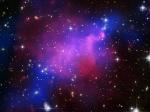 Cluster Crash Illuminates Dark Matter Conundrum
20.08.2007
Huge clusters of galaxies are surely colliding in Abell 520 but astrophysicists aren't sure why the dark matter is becoming separated from the normal matter. The dark matter in the above multi-wavelength image is shown in false blue, determined by carefully detailing how the cluster distorts light emitted by more distant galaxies.
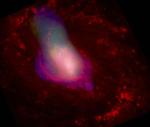 NGC 1068 and the X Ray Flashlight
11.07.2003
At night, tilting a flashlight up under your chin hides the glowing bulb from the direct view of your friends. Light from the bulb still reflects from your face though, and can give you a startling appearance.
|
January February March April May June July August September |
|||||||||||||||||||||||||||||||||||||||||||||||||