
|
You entered: Mercury
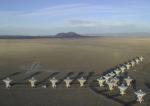 The Very Large Array Turns Twenty
30.05.2000
The most photogenic array of radio telescopes in the world has also been one of the most productive. Each of the 27 radio telescopes in the Very Large Array (VLA) is the size of a house and can be moved on train tracks.
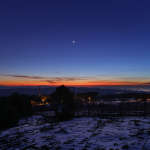 Twilight with Moon and Planets
20.02.2026
Only two days after the February New Moon's annular eclipse of the Sun, a slender lunar crescent poses above the western horizon after sunset in this wintry twilight skyscape. Its nightside faintly illuminated...
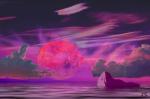 Sunrise from the Surface of Gliese 581c
2.05.2007
How might a sunrise appear on Gliese 581c? One artistic guess is shown above. Gliese 581c is the most Earth-like planet yet discovered and lies a mere 20 light-years distant. The central red dwarf...
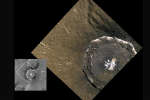 MESSENGER s Degas View
22.06.2011
Now imaging inner planet Mercury from orbit, the MESSENGER spacecraft wide angle camera has returned this impressive color view of Degas Crater, with a full resolution of 90 meters per pixel. Named...
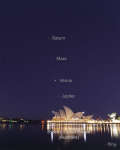 Planet Parade over Sydney Opera House
25.04.2022
The world is waking up to a picturesque planet parade. Just before dawn, the eastern skies over much of planet Earth are decorated by a notable line of familiar planets. In much of Earth...
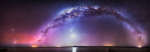 From the Northern to the Southern Cross
27.01.2014
There is a road that connects the Northern to the Southern Cross but you have to be at the right place and time to see it. The road, as pictured above, is actually...
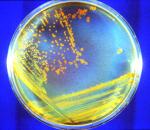 D rad Bacteria: Candidate Astronauts
30.09.2002
These bacteria could survive on another planet. In an Earth lab, Deinococcus radiodurans (D. rad) survive extreme levels of radiation, extreme temperatures, dehydration, and exposure to genotoxic chemicals. Amazingly, they even have the ability to repair their own DNA, usually with 48 hours. Known as an extremophile, bacteria such as D.
 APOD: 2025 February 2 Б Comet G3 ATLAS Disintegrates
1.02.2025
What's happening to Comet G3 ATLAS? After passing near the Sun in mid-January, the head of the comet has become dimmer and dimmer. By late January, Comet C/2024 G3 (ATLAS) had become a headless wonder -- even though it continued to show impressive tails after sunset in the skies of Earth's Southern Hemisphere.
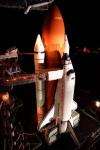 John Glenn: Discovery Launch
29.10.1998
At left, the Space Shuttle Discovery waits in darkness on Kennedy Space Center's launch pad 39B. At right, on Thursday October 29, Discovery blasts through a bright afternoon sky returning Senator John Glenn to space over 36 years after he became the first American in orbit.
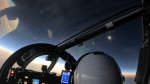 APOD: 2026 September 5 Б Chasing the Moon s Shadow
4.09.2026
Chasing the shadow of a New Moon, NASAБs WB-57F high altitude research aircraft took to the skies off the coast of Iceland on August 12 to observe a total solar eclipse. At 50,000 feet the aircraft was piloted along the precisely determined path of totality to maximize its time in the MoonБs shadow.
|
January February March April May June July August September October |
|||||||||||||||||||||||||||||||||||||||||||||||||