
|
You entered: Mercury
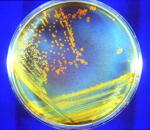 D rad Bacteria: Candidate Astronauts
22.01.2006
These bacteria could survive on another planet. In an Earth lab, Deinococcus radiodurans (D. rad) survive extreme levels of radiation, extreme temperatures, dehydration, and exposure to genotoxic chemicals. Amazingly, they even have the ability to repair their own DNA, usually with 48 hours. Known as an extremophile, bacteria such as D.
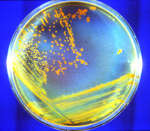 D. rad Bacteria: Candidate Astronauts
30.08.2009
These bacteria could survive on another planet. In an Earth lab, Deinococcus radiodurans (D. rad) survive extreme levels of radiation, extreme temperatures, dehydration, and exposure to genotoxic chemicals. Amazingly, they even have the ability to repair their own DNA, usually with 48 hours. Known as an extremophile, bacteria such as D.
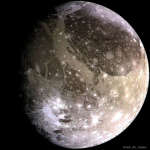 Ganymede: The Largest Moon
14.05.2017
What does the largest moon in the Solar System look like? Jupiter's moon Ganymede, larger than even Mercury and Pluto, has an icy surface speckled with bright young craters overlying a mixture of older, darker, more cratered terrain laced with grooves and ridges.
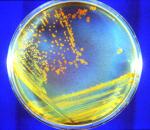 D rad Bacteria: Candidate Astronauts
25.04.2004
These bacteria could survive on another planet. In an Earth lab, Deinococcus radiodurans (D. rad) survive extreme levels of radiation, extreme temperatures, dehydration, and exposure to genotoxic chemicals. Amazingly, they even have the ability to repair their own DNA, usually with 48 hours. Known as an extremophile, bacteria such as D.
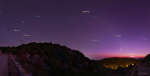 APOD: 2023 January 2 Б After Sunset Planet Parade
2.01.2023
Look up tonight and see a whole bunch of planets. Just after sunset, looking west, planets Venus, Saturn, Jupiter and Mars will all be simultaneously visible. Listed west to east, this planetary lineup will have Venus nearest the horizon, but setting shortly after the Sun.
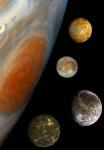 Jupiter And Family
18.11.2000
This composite image features classic portraits of members of one of the Solar System's most prominent families - Jupiter and its four large "Galilean" moons. Starting from the top the moons are Io, Europa, Ganymede, and Callisto. The top-to-bottom order is also the order of increasing distance from Jupiter.
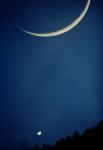 Moon And Venus Share The Sky
28.07.2000
July is drawing to a close and in the past few days, some early morning risers could have looked east and seen a crescent Moon sharing the pre-dawn skies with planets Jupiter and Saturn.
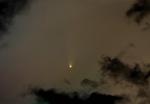 Comet McNaught Heads for the Sun
5.01.2007
Early morning risers with a clear and unobstructed eastern horizon can enjoy the sight of Comet McNaught (C/2006 P1) in dawn skies over the next few days. Discovered in August by R. H. McNaught...
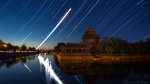 The Solar System s Planet Trails
1.07.2022
Stars trail through a clear morning sky in this postcard from a rotating planet. The timelapse image is constructed from consecutive exposures made over nearly three hours with a camera fixed to a tripod beside the Forbidden City in Beijing, China on June 24.
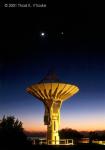 Bright Venus
8.03.2001
Have you seen a bright evening star in the western sky lately? That's no star, that's planet Venus the second "rock" from the Sun. Blazing at -4.6 magnitude, Venus, after the Sun and Moon, is the third brightest celestial body in planet Earth's sky.
|
January February March April May June July August September October |
|||||||||||||||||||||||||||||||||||||||||||||||||