
|
You entered: time
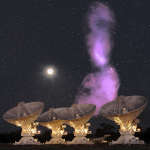 Centaurus Radio Jets Rising
13.04.2011
What if you could see the huge radio jets of Centaurus A rising? The Cen A radio jets are not only over a million light years long, they occupy an angular area over 200 times greater than the full Moon in Earth's sky.
 Sgr A: Fast Stars Near the Galactic Center
20.12.2000
Why are these stars moving so fast? Shown above is a time-lapse movie in infrared light detailing how stars in the central light-year of our Galaxy have moved over the past eight years. The yellow mark at the image center represents the location of a peculiar radio source named Sgr A
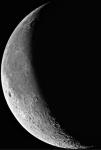 The Moon In January
29.01.1999
Reckoning dates by Universal Time, the next full moon will be on Sunday, January 31. Since the last was on January 2nd, Sunday's full moon will be the second this month. Perhaps only...
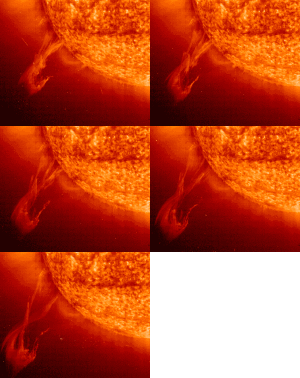 A Twisted Solar Eruptive Prominence
3.04.2000
A huge eruptive prominence is seen moving out from our Sun in this condensed half-hour time-lapse sequence. Ten Earths could easily fit in the "claw" of this seemingly solar monster. This large prominence, though, is significant not only for its size, but its shape.
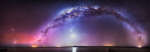 From the Northern to the Southern Cross
27.01.2019
There is a road that connects the Northern to the Southern Cross but you have to be at the right place and time to see it. The road, as pictured here, is actually...
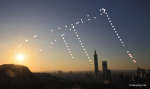 Analemma over Taipei
21.06.2022
Does the Sun return to the same spot on the sky every day? No. A better and more visual answer to that question is an analemma, a composite of images taken at the same time and from the same place over the course of a year.
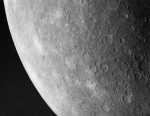 Southwest Mercury
13.09.1996
The planet Mercury resembles a moon. Mercury's old surface is heavily cratered like many moons. Mercury is larger than most moons but smaller than Jupiter's moon Ganymede and Saturn's moon Titan. Mercury is much denser and more massive than any moon, though, because it is made mostly of iron.
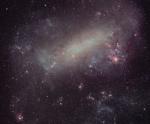 The Large Cloud of Magellan
2.09.2004
Portuguese navigator Fernando de Magellan and his crew had plenty of time to study the southern sky during the first circumnavigation of planet Earth. As a result, two fuzzy cloud-like objects easily visible for southern hemisphere skygazers are known as the Clouds of Magellan.
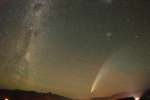 Comet McNaught Over New Zealand
19.10.2014
Comet McNaught was perhaps the most photogenic comet of modern times -- from Earth. After making quite a show in the northern hemisphere in early January of 2007, the comet moved south and developed a long and unusual dust tail that dazzled southern hemisphere observers.
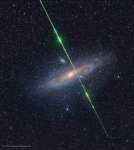 Meteor before Galaxy
17.08.2016
What's that green streak in front of the Andromeda galaxy? A meteor. While photographing the Andromeda galaxy last Friday, near the peak of the Perseid Meteor Shower, a sand-sized rock from deep space crossed right in front of our Milky Way Galaxy's far-distant companion.
|
January February March April May June July August |
||||||||||||||||||||||||||||||||||||||||||||||||||||||||