
|
You entered: ice
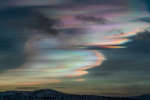 Nacreous Clouds over Lapland
8.02.2023
Vivid and lustrous, wafting iridescent waves of color wash across this skyscape from Kilpisjцrvi, Finland. Known as nacreous clouds or mother-of-pearl clouds, they are rare. But their unforgettable appearance was captured looking south at 69 degrees north latitude at sunset on January 24.
 Nacreous Clouds over Sweden
31.01.2025
Vivid and lustrous, wafting iridescent waves of color wash across this skyscape from northern Sweden. Known as nacreous clouds or mother-of-pearl clouds, they are rare. But their unforgettable appearance was captured in this snapshot on January 12 with the Sun just below the local horizon.
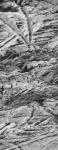 560 Kilometers Above Europa
2.03.1998
This is the closest photograph ever taken of Europa. Last December, NASA's spacecraft Galileo swept past the Jovian moon and took photographs which were released yesterday. Speculation that life-bearing oceans exist beneath Europa's surface caused NASA to put Galileo on orbits that approach Europa.
 A Cloud Shadow Sunrise
26.02.2002
What could cause a ray of dark? Such a ray was caught in spectacular fashion above the Florida Everglades two years ago. The cause is something surprisingly familiar: a shadow. The gold-tinged cloud near the horizon blocks sunlight from reflecting off air behind the cloud, making that column of air appear unusually dark.
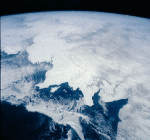 Water World
17.11.1995
Water (Dihydrogen Oxide, H2O) is a truly remarkable chemical compound and is fundamental to life on Earth. Earth is the only planet in the Solar System where the surface temperature and pressure allow the three forms of water, solid (ice), liquid (ocean), and gas (water vapor condensing in clouds) to exist simultaneously on its surface.
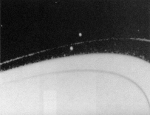 Prometheus, Pandora and Saturn's F Ring
22.12.1995
The third and fourth innermost moons of Saturn were unexpectedly discovered to be gravitational "shepards." The inner moon Prometheus and the outer moon Pandora use their gravitational attraction to define Saturn's outermost ring.
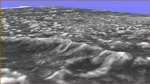 A Flyby View of Ganymede
25.10.1996
This is what it would look like to fly over the surface of Jupiter's moon Ganymede. NASA's robot spacecraft Galileo recently approached only 6000 miles from this frozen ice-ball of a moon. The above image is a digital reconstruction from two images taken during this flyby.
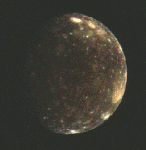 Callisto: Dark Smashed Iceball
6.09.1995
Callisto is a dirty battered world, showing the most beaten surface of Jupiter's major moons. Made of a rocky core covered by fractured ice, Callisto's past collisions with large meteors are evident as large craters surrounded by concentric rings.
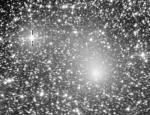 Introducing Comet Lee
27.04.1999
Another large snowball is falling toward the Sun. Comet Lee was discovered two weeks ago by Steve Lee (AAO) in Australia, and is expected to brighten as it approaches the inner Solar System. Comet...
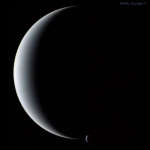 Crescent Neptune and Triton
26.05.2023
Gliding through the outer Solar System, in 1989 the Voyager 2 spacecraft looked toward the Sun to find this view of most distant planet Neptune and its moon Triton together in a crescent phase. The elegant image of ice-giant planet and largest moon was taken from behind just after Voyager's closest approach.
|
January February March April May June July August September |
|||||||||||||||||||||||||||||||||||||||||||||||||