
|
You entered: sky
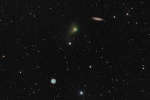 The Comet, the Owl, and the Galaxy
21.04.2016
Comet C/2014 S2 (PanSTARRS) poses for a Messier moment in this telescopic snapshot from April 18. In fact it shares the 1.5 degree wide field-of-view with two well-known entries in the 18th century comet-hunting astronomer's famous catalog.
GB-finalLeshin1024.preview.jpg) The Elephant s Trunk Nebula in Cepheus
The Elephant s Trunk Nebula in Cepheus
19.01.2017
Like an illustration in a galactic Just So Story, the Elephant's Trunk Nebula winds through the emission nebula and young star cluster complex IC 1396, in the high and far off constellation of Cepheus. Also known as vdB 142, the cosmic elephant's trunk is over 20 light-years long.
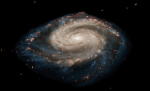 Virtual Flyby of the Whirlpool Galaxy
6.05.2019
What would it look like to fly over a spiral galaxy? To help visualize this, astronomers and animators at the Space Telescope Science Institute computed a virtual flyby of the Whirlpool Galaxy (M51) using data and images from the Hubble Space Telescope.
 Anticrepuscular Rays Converge Opposite the Sun
24.06.2019
Is there ever anything interesting to see in the direction opposite the Sun? Sometimes there is. Notable items include your own shadow, a shadow of the Moon during a total solar eclipse, a full...
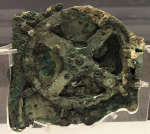 The Antikythera Mechanism
21.03.2021
No one knew that 2,000 years ago, the technology existed to build such a device. The Antikythera mechanism, pictured, is now widely regarded as the first computer. Found at the bottom...
 The Solar System s Planet Trails
1.07.2022
Stars trail through a clear morning sky in this postcard from a rotating planet. The timelapse image is constructed from consecutive exposures made over nearly three hours with a camera fixed to a tripod beside the Forbidden City in Beijing, China on June 24.
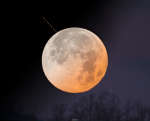 Full Moon, Full Mars
15.12.2022
On December 8 a full Moon and a full Mars were close, both bright and opposite the Sun in planet Earth's sky. In fact Mars was occulted, passing behind the Moon when viewed from some locations across Europe and North America.
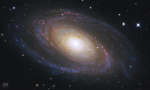 Messier 81
27.03.2025
One of the brightest galaxies in planet Earth's sky is similar in size to our Milky Way Galaxy: big, beautiful Messier 81. Also known as NGC 3031 or Bode's galaxy for its 18th century discoverer, this grand spiral can be found toward the northern constellation of Ursa Major, the Great Bear.
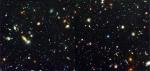 The Deep Field
9.02.1997
Galaxies like colorful pieces of candy fill the Hubble Deep Field - humanity's most distant yet optical view of the Universe. The dimmest, some as faint as 30th magnitude (about four billion times fainter...
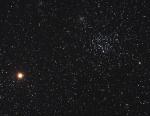 Mars and the Star Clusters
19.04.2006
This evening's skyscape includes a view similar to this one, recorded in western skies on April 16 - an orange-hued planet Mars wandering near rich open star cluster M35. Also notable is fainter star cluster NGC 2158, just above and left of M35.
|
January February March April May June July August September October |
|||||||||||||||||||||||||||||||||||||||||||||||||