
|
You entered: star
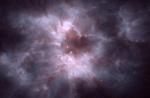 NGC 2440: Cocoon of a New White Dwarf
26.04.1998
Like a butterfly, a white dwarf star begins its life by casting off a cocoon that enclosed its former self. In this analogy, however, the Sun would be a caterpillar and the ejected shell of gas would become the prettiest of all!
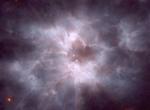 NGC 2440: Cocoon of a New White Dwarf
22.01.2005
Like a butterfly, a white dwarf star begins its life by casting off a cocoon that enclosed its former self. In this analogy, however, the Sun would be a caterpillar and the ejected shell of gas would become the prettiest of all!
 The Dark River to Antares
3.06.2008
Connecting the Pipe Nebula to the bright star Antares is a flowing dark cloud nicknamed the Dark River. The murkiness of the Dark River is caused by absorption of background starlight by dust, although the nebula contains mostly hydrogen and molecular gas.
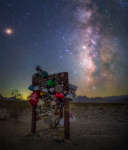 The Teapot and the Milky Way
19.07.2018
The recognizable stars of the Teapot asterism in the constellation Sagittarius posed with the Milky Way over Death Valley, planet Earth on this quiet, dark night. The surreal scene was appropriately captured from Teakettle Junction, marked by the wooden sign adorned with terrestrial teapots and kettles on the rugged road to Racetrack Playa.
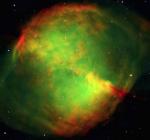 M27: Not A Comet
9.10.1998
While searching the skies above 18th century France for comets, astronomer Charles Messier diligently recorded this object as number 27 on his list of things which are definitely not comets. So what is it?
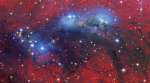 NGC 6914 Nebulae
3.03.2011
A dramatic study in contrasts, this colorful skyscape features stars, dust, and glowing gas in NGC 6914. The complex of nebulae lies some 6,000 light-years away, toward the high-flying northern constellation Cygnus and the plane of our Milky Way Galaxy.
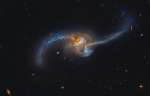 Merging NGC 2623
19.10.2012
NGC 2623 is really two galaxies that are becoming one. Seen to be in the final stages of a titanic galaxy merger, the pair lies some 300 million light-years distant toward the constellation Cancer.
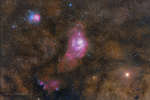 Trifid, Lagoon, and Mars
5.10.2016
Bright nebulae and star clusters along this 5 degree wide field of view are popular stops on telescopic tours of the constellation Sagittarius and the crowded starfields of the central Milky Way. Cataloged...
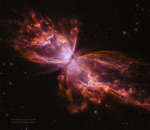 NGC 6302: The Butterfly Nebula
1.03.2019
The bright clusters and nebulae of planet Earth's night sky are often named for flowers or insects. Though its wingspan covers over 3 light-years, NGC 6302 is no exception. With an estimated surface...
 Fireball!
25.02.1996
On rare but spectacular occasions, fireballs, meteors brighter than the brightest stars, flash through the heavens - sometimes making audible sounds and occasionally surviving to strike the Earth's surface. The path of one such...
|
January February March April May June July August September October |
|||||||||||||||||||||||||||||||||||||||||||||||||