
|
You entered: face
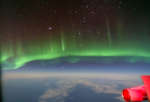 SOFIA s Southern Lights
29.07.2022
SOFIA, the Stratospheric Observatory for Infrared Astronomy, is a Boeing 747SP aircraft modified to carry a large reflecting telescope into the stratosphere. The ability of the airborne facility to climb above about 99 percent of Earth's infrared-blocking atmosphere has allowed researchers to observe from almost anywhere over the planet.
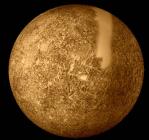 Mariner s Mercury
24.11.2001
Mercury, the closest planet to the Sun, remains the most mysterious of the Solar System's inner planets. Hiding in the Sun's glare it is a difficult target for Earth bound observers.
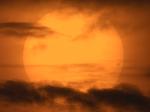 A Picturesque Venus Transit
23.06.2004
The rare transit of Venus across the face of the Sun earlier this month was one of the better-photographed events in sky history. Both scientific and artistic images have been flooding in from the areas that could see the transit: Europe and much of Asia, Africa, and North America.
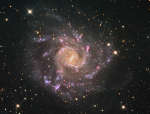 Grand Spiral Galaxy NGC 7424
8.01.2013
The grand, winding arms are almost mesmerizing in this face-on view of NGC 7424, a spiral galaxy with a prominent central bar. About 40 million light-years distant in the headlong constellation Grus, this island universe is also about 100,000 light-years across making it remarkably similar to our own Milky Way.
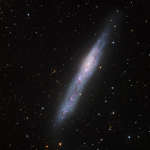 Magellanic Galaxy NGC 55
12.07.2019
Irregular galaxy NGC 55 is thought to be similar to the Large Magellanic Cloud (LMC). But while the LMC is about 180,000 light-years away and a well-known satellite of our own Milky Way Galaxy, NGC 55 is more like 6 million light-years distant, a member of the Sculptor Galaxy Group.
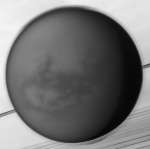 Titan: Moon over Saturn
9.01.2021
Like Earth's moon, Saturn's largest moon Titan is locked in synchronous rotation. This mosaic of images recorded by the Cassini spacecraft in May of 2012 shows its anti-Saturn side, the side always facing away from the ringed gas giant.
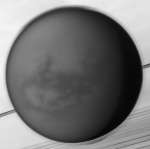 Titan: Moon over Saturn
27.05.2022
Like Earth's moon, Saturn's largest moon Titan is locked in synchronous rotation. This mosaic of images recorded by the Cassini spacecraft in May of 2012 shows its anti-Saturn side, the side always facing away from the ringed gas giant.
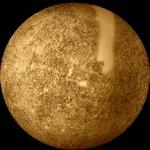 Mariner's Mercury
17.12.1996
Mercury, the closest planet to the Sun, remains the most mysterious of the Solar System's inner planets. Hiding in the Sun's glare it is a difficult target for Earth bound observers.
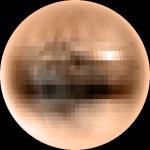 Pluto in True Color
3.09.2006
Pluto is mostly brown. The above picture captures the true colors of Pluto as well as the highest surface resolution so far recovered. Although no spacecraft has yet visited this distant world, the New Horizons spacecraft launched early this year is expected to reach Pluto in 2015.
 The Moon from Zond 8
16.07.2013
Which moon is this? Earth's. Our Moon's unfamiliar appearance is due partly to an unfamiliar viewing angle as captured by a little-known spacecraft -- the Soviet Union's Zond 8 that circled the Moon in October of 1970.
|
January February March April May June July August September |
|||||||||||||||||||||||||||||||||||||||||||||||||