
|
You entered: NASA
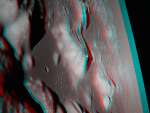 Apollo 17: A Stereo View from Lunar Orbit
13.12.2012
Get out your red/blue glasses and check out this awesome stereo view of another world. The scene was recorded by Apollo 17 mission commander Eugene Cernan on December 11, 1972, one orbit before descending to land on the Moon.
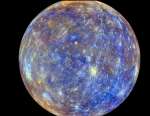 All of Mercury
12.06.2013
For the first time, the entire surface of planet Mercury has been mapped. Detailed observations of the innermost planet's surprising crust have been ongoing since the robotic MESSENGER spacecraft first passed Mercury in 2008 and began orbiting in 2011.
 Flying Past Neptunes Moon Triton
26.08.2014
What would it look like to fly past Triton, the largest moon of planet Neptune? Only one spacecraft has ever done this -- and now, for the first time, images of this dramatic encounter have been gathered into a movie. On 1989 August 25, the Voyager 2 spacecraft shot through the Neptune system with cameras blazing.
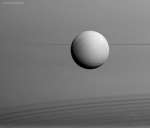 Dione, Rings, Shadows, Saturn
24.08.2015
What's happening in this strange juxtaposition of moon and planet? First and foremost, Saturn's moon Dione was captured here in a dramatic panorama by the robotic Cassini spacecraft currently orbiting the giant planet. The bright and cratered moon itself spans about 1100-km, with the large multi-ringed crater Evander visible on the lower right.
 Solar System Portrait
11.02.2017
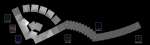
On Valentine's Day in 1990, cruising four billion miles from the Sun, the Voyager 1 spacecraft looked back one last time to make this first ever Solar System family portrait. The complete portrait is a 60 frame mosaic made from a vantage point 32 degrees above the ecliptic plane.
 NGC 4302 and NGC 4298
21.04.2017
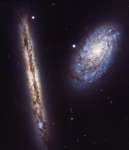
Seen edge-on, spiral galaxy NGC 4302 (left) lies about 55 million light-years away in the well-groomed constellation Coma Berenices. A member of the large Virgo Galaxy Cluster, it spans some 87,000 light-years, a little smaller than our own Milky Way.
 Aerosol Earth
1.09.2018
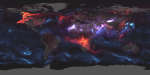
On August 23, 2018 the identification and distribution of aerosols in the Earth's atmosphere is shown in this dramatic, planet-wide visualization. Produced in real time, the Goddard Earth Observing System Forward Processing (GEOS...
 Solar System Family Portrait
14.02.2019
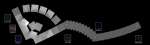
On Valentine's Day in 1990, cruising four billion miles from the Sun, the Voyager 1 spacecraft looked back one last time to make this first ever Solar System family portrait. The complete portrait is a 60 frame mosaic made from a vantage point 32 degrees above the ecliptic plane.
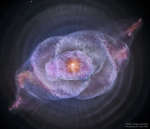 The Cats Eye Nebula in Optical and Xray
1.05.2019
To some it looks like a cat's eye. To others, perhaps like a giant cosmic conch shell. It is actually one of brightest and most highly detailed planetary nebula known, composed of gas expelled in the brief yet glorious phase near the end of life of a Sun-like star.
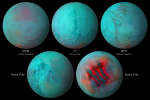 Enceladus in Infrared
24.09.2020
One of our Solar System's most tantalizing worlds, icy Saturnian moon Enceladus appears in these detailed hemisphere views from the Cassini spacecraft. In false color, the five panels present 13 years of infrared image data from Cassini's Visual and Infrared Mapping Spectrometer and Imaging Science Subsystem.
|
January February March April May June July August September October |
|||||||||||||||||||||||||||||||||||||||||||||||||