
|
You entered: surface
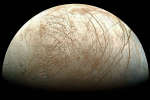 Gibbous Europa
8.03.2009
Although the phase of this moon might appear familiar, the moon itself might not. In fact, this gibbous phase shows part of Jupiter's moon Europa. The robot spacecraft Galileo captured this image mosaic during its mission orbiting Jupiter from 1995 - 2003.
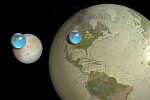 APOD: 2025 October 12 Б All the Water on Europa
12.10.2025
How much of Jupiter's moon Europa is made of water? No one is sure, but probably a lot. Based on the Galileo probe data acquired during its exploration of the Jovian system from 1995 to 2003, Europa possesses a deep, global ocean of liquid water beneath a layer of surface ice.
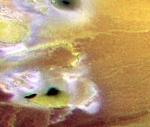 Calderas And Cliffs Near Io's South Pole
27.04.2000
Braving intense radiation belts, the Galileo spacecraft once again flew past the surface of Jupiter's moon Io (sounds like EYE-oh) on February 22. Combining high resolution black and white images from that flyby...
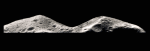 NEAR to an Asteroid
15.02.1996
Excitement mounts as NASA's Near Earth Asteroid Rendezvous (NEAR) spacecraft nears launch - currently scheduled for 3:53 ET on February 16. NEAR's mission is to become the first spacecraft to rendezvous with and orbit an asteroid, the asteroid designated 433 Eros.
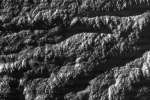 Seventeen Hundred Kilometers Above Enceladus
5.11.2008
Above is one of the closest pictures yet obtained of Saturn's ice-spewing moon Enceladus. The image was taken from about 1,700 kilometers up as the robotic Cassini spacecraft zoomed by the fractured ice ball last week.
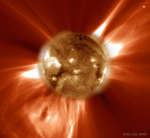 Sun Storm: A Coronal Mass Ejection
10.01.2016
What's happening to our Sun? Another Coronal Mass Ejection (CME)! The Sun-orbiting SOHO spacecraft has imaged many erupting filaments lifting off the active solar surface and blasting enormous bubbles of magnetic plasma into space.
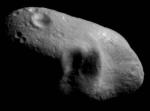 NEAR Shoemaker Views Eros
11.02.2001
Orbiting asteroid 433 Eros, 145 million miles from Earth, NASA's NEAR spacecraft has been returning stunning views as its year long mission of exploration nears completion. A mosaic of NEAR images recorded at a range of about 127 miles, this picture illustrates some of the amazing
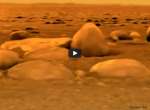 Huygens: Titan Descent Movie
21.01.2013
What would it look like to land on Saturn's moon Titan? The European Space Agency's Huygens probe set down on the Solar System's cloudiest moon in 2005, and a time-lapse video of its descent images was created.
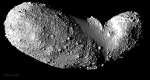 APOD: 2026 June 30 Б Unusually Smooth Sections of Asteroid Itokawa
30.06.2026
Why are parts of this asteroid's surface so smooth? The answer seems likely to do with the dynamics of an asteroid that is a loose pile of rubble rather than a solid rock.
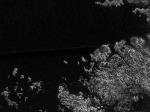 Liquid Sea on Saturns Titan
30.05.2007
What is this vast dark region on Titan? Quite possible a sea of liquid hydrocarbons. The region was imaged earlier this month when the robotic Cassini spacecraft swooped past Saturn's cloudy moon and illuminated part of it with radar.
|
January February March April May June July August September October |
|||||||||||||||||||||||||||||||||||||||||||||||||