
|
You entered: comet
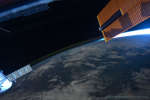 A Perseid Below
8.08.2021
Earthlings typically watch meteor showers by looking up. But this remarkable view, captured on August 13, 2011 by astronaut Ron Garan, caught a Perseid meteor by looking down. From Garan's perspective onboard...
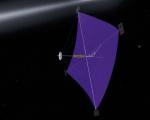 Solar Sail
21.08.2004
Could solar sailing become a future Olympic sport? Nearly 400 years ago astronomer Johannes Kepler observed comet tails blown by a solar breeze and suggested that vessels might likewise navigate through space using appropriately fashioned sails.
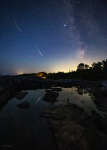 APOD: 2026 August 15 Б Bright Perseids from Sweden
15.08.2026
Known for its bright and fast meteors, the annual Perseid Meteor Shower comes to planet Earth's skies from a radiant in the heroic constellation Perseus. The popular northern summer celestial spectacle is created...
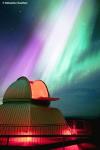 Mount Megantic Magnetic Storm
17.08.2000
Plasma from the Sun and debris from a comet both collided with planet Earth last Saturday morning triggering magnetic storms and a meteor shower in a dazzling atmospheric spectacle. The debris stream from comet...
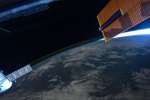 Perseid Below
17.08.2011
Denizens of planet Earth watched this year's Perseid meteor shower by looking up into the moonlit night sky. But this remarkable view captured by astronaut Ron Garan looks down on a Perseid meteor.
 Pleiades from Planet Earth
1.11.2025
The lovely Pleiades star cluster shines in Earth's night sky, a compact group of stars some 400 light-years distant toward the constellation Taurus and the Orion Arm of our Milky Way galaxy. Recognized since ancient times, the remarkable celestial gathering is visible to the unaided eye.
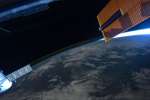 Perseid Below
10.08.2012
Denizens of planet Earth watched last year's Perseid meteor shower by looking up into the bright moonlit night sky. But this remarkable view captured on August 13, 2011 by astronaut Ron Garan looks down on a Perseid meteor.
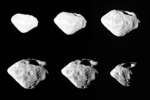 Rosetta Spacecraft Passes Asteroid Steins
8.09.2008
What's that diamond in the sky? Cruising though space, sometimes you'll come across an unusual object. Such was the case on Friday for ESA's Rosetta spacecraft on it's way to comet Churyumov-Gerasimenko in 2014.
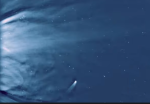 APOD: 2025 March 31 Б Parker: The Solar System from Near the Sun
31.03.2025
If you watch long enough, a comet will appear. Before then, you will see our Solar System from inside the orbit of Mercury as recorded by NASA's Parker Solar Probe looping around the Sun.
 Earth Nears Asteroid Toutatis
1.10.2004
On Wednesday, September 29, the Earth came within one million miles of the asteroid Toutatis -- the closest predicted aproach of our fair planet to a sizable asteroid or comet in this century. Coming within...
|
January February March April May June July August September October |
|||||||||||||||||||||||||||||||||||||||||||||||||