
|
You entered: camera
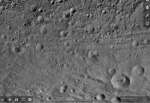 Vesta Trek: A Digital Model of Asteroid Vesta
21.04.2015
You can explore asteroid Vesta. Recently, NASA's robotic spaceship Dawn visited Vesta, the second largest object in our Solar System's main asteroid belt, which lies between Mars and Jupiter. During a year-long stopover, Dawn's cameras photographed Vesta's entire surface, documenting all of the minor planet's major mountains and craters.
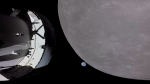 Earthset from Orion
24.01.2026
Eight billion people are about to disappear in this snapshot from space taken on 2022 November 21. On the sixth day of the Artemis I mission, their home world is setting behind the Moon's bright edge as viewed by an external camera on the outbound Orion spacecraft.
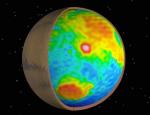 Inside Mars
23.03.2000
What's inside Mars? From orbit, the Mars Global Surveyor (MGS) spacecraft has recorded detailed images of the red planet since July 1997. Still, its cameras can not look beneath the surface. But minute...
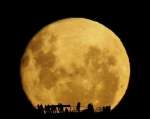 Full Moon Silhouettes
7.09.2014
Have you ever watched the Moon rise? The slow rise of a nearly full moon over a clear horizon can be an impressive sight. One impressive moonrise was imaged in early 2013 over Mount Victoria Lookout in Wellington, New Zealand.
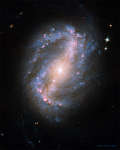 Barred Spiral Galaxy NGC 6217
21.02.2022
Many spiral galaxies have bars across their centers. Even our own Milky Way Galaxy is thought to have a modest central bar. Prominently barred spiral galaxy NGC 6217, featured here, was captured in spectacular detail in this image taken by the Advanced Camera for Surveys on the orbiting Hubble Space Telescope in 2009.
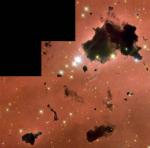 Thackeray's Globules
8.01.2002
Rich star fields and glowing hydrogen gas silhouette dense, opaque clouds of interstellar gas and dust in this Hubble Space Telescope close-up of IC 2944, a bright star forming region in Centaurus, 5,900 light-years away. The largest of these dark globules, first spotted by South African astronomer A. D.
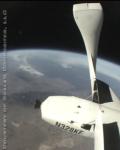 Planet Earth from SpaceShipOne
25.06.2004
On June 21st, pilot Mike Melvill made a historic flight in the winged craft dubbed SpaceShipOne -- the first private manned mission to space. The spaceship reached an altitude of just over 62 miles (100 kilometers) on a suborbital trajectory, similar to the early spaceflights in NASA's Mercury Program. So, how was the view?
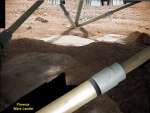 Phoenix and the Holy Cow
12.11.2008
The northern Martian summer is waning. As predicted, a decline in daylight hours, deteriorating weather, and dust storms are preventing solar arrays on the Phoenix Mars Lander from providing power. Phoenix's last signal...
 Unusual Red Glow Over Minnesota
17.02.2009
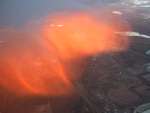
What in heaven's blazes is that? When landing in Minneapolis, Minnesota, USA in 2002, just after his flight descended below cloud level in the early evening, passenger Tyler Blessing saw and photographed "huge...
 Mare Orientale
12.03.2011
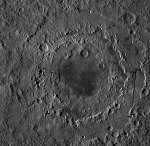
Shaped like a target ring bull's-eye, the Mare Orientale is one of the most striking large scale lunar features. Located on the Moon's extreme western edge, it is unfortunately difficult to see from an earthbound perspective.
|
January February March April May June July August |
||||||||||||||||||||||||||||||||||||||||||||||||||||||||