
|
You entered: NASA
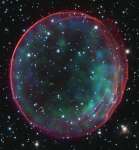 The Case of the Missing Supernova Companion
12.01.2012
Where's the other star? At the center of this supernova remnant should be the companion star to the star that blew up. Identifying this star is important for understanding just how Type...
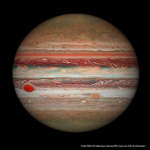 Hubbles Jupiter and the Shrinking Great Red Spot
9.01.2022
What will become of Jupiter's Great Red Spot? Gas giant Jupiter is the solar system's largest world with about 320 times the mass of planet Earth. Jupiter is home to one of the largest and longest lasting storm systems known, the Great Red Spot (GRS), visible to the left.
 APOD: 2023 June 30 Б Orbits of Potentially Hazardous Asteroids
30.06.2023
Are asteroids dangerous? Some are, but the likelihood of a dangerous asteroid striking the Earth during any given year is low. Because some past mass extinction events have been linked to asteroid impacts, however, humanity has made it a priority to find and catalog those asteroids that may one day affect life on Earth.
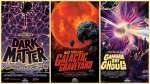 A Galaxy of Horrors
31.10.2020
Explore extreme and terrifying realms of the Universe tonight. If you dare to look, mysterious dark matter, a graveyard galaxy, zombie worlds, and gamma-ray bursts of doom are not all that awaits. Just follow the link and remember, it's all based on real science, even the scary parts. Have a safe and happy halloween!
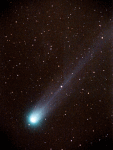 What are Comet Tails Made Of?
26.03.1996
The tail of comet Hyakutake, visible in this recent color image, is composed of dust and gas driven off the icy comet nucleus by the Sun's heat and blown away by the solar wind. Bathed in solar ultraviolet light, the gas molecules break down and are excited, producing a characteristic glow.
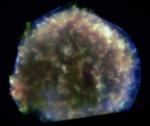 X Rays From Tycho s Supernova Remnant
12.09.2002
In 1572, Danish astronomer Tycho Brahe recorded the sudden appearance of a bright new star in the constellation Cassiopeia. The new star faded from view over a period of months and is believed to have been a supernova, one of the last stellar explosions seen in our Milky Way galaxy.
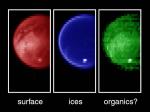 Titan from Cassini in Infrared
6.07.2004
Could life exist under the smog of Titan? If not, what is creating all of the methane? To help answer these questions, the largest and most mysterious moon of Saturn got a quick first look from the Cassini robot spacecraft soon after entering orbit around the giant planet last week.
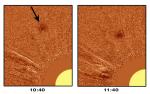 Coronal Inflow
29.11.2001
The active Sun has thrown a lot our way lately, including storms of particles streaming outward in the solar wind and clouds of plasma which triggered awesome auroral displays. Still, a growing body...
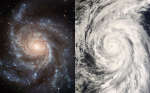 Logarithmic Spirals
17.05.2008
Uncomfortably close Typhoon Rammasun (right) and 25 million light-year distant galaxy M101 don't seem to have much in common. For starters, Rammasun was only a thousand kilometers or so across while M101...
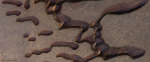 Striped Sand Dunes on Mars
6.01.2021
Why are these sand dunes on Mars striped? No one is sure. The featured image shows striped dunes in Kunowsky Crater on Mars, photographed recently with the Mars Reconnaissance OrbiterБs HiRISE Camera. Many Martian dunes are known to be covered unevenly with carbon dioxide (dry ice) frost, creating patterns of light and dark areas.
|
January February March April May June July August September October |
|||||||||||||||||||||||||||||||||||||||||||||||||