
|
You entered: time
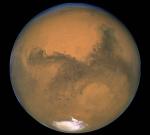 Big Mars from Hubble
27.08.2003
At about 10 am Universal Time today, Mars and Earth will pass closer than in nearly 60,000 years. Mars, noticeably red, will be the brightest object in the eastern sky just after sunset.
 Zodiacal Light and the False Dawn
25.08.2004
An unusual triangle of light will be particularly bright near the eastern horizon before sunrise during the next two months for observers in Earth's northern hemisphere. Once considered a false dawn, this triangle of light is actually Zodiacal Light, light reflected from interplanetary dust particles.
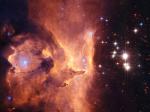 Massive Stars in Open Cluster Pismis 24
19.12.2006
How massive can a normal star be? Estimates made from distance, brightness and standard solar models had given one star in the open cluster Pismis 24 over 200 times the mass of our Sun, making it a record holder.
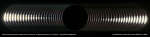 Baily s Beads near Solar Eclipse Totality
18.08.2008
Just before the Sun blacks out, something strange occurs. As the Moon moves to completely cover the Sun in a total solar eclipse, beads of bright sunlight stream around the edge of the Moon. This effect, known as Baily's beads, is named after Francis Baily who called attention to the phenomenon in 1836.
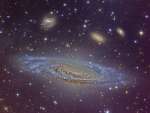 Beautiful Spiral NGC 7331
22.10.2008
A favorite target for astronomers, big, beautiful spiral galaxy NGC 7331 is one of the brighter galaxies not found in Charles Messier's famous 18th century catalog. About 50 million light-years distant...
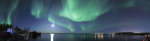 Aurora Over Yellowknife
22.09.2009
Sometimes, after your eyes adapt to the dark, a spectacular sky appears. In this case, a picturesque lake lies in front of you, beautiful green auroras flap high above you, brilliant stars shine far in the distance, and a brilliant moon shines just ahead of you.
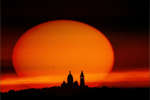 Sunspots and Silhouettes
4.07.2012
What stands between you and the Sun? Apparently, as viewed from Paris last week, one visible thing after another. First, in the foreground, is the Basilica of the Sacred Heart, built in the late 1800s and located on the highest hill in Paris, France.
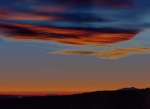 Mercury on the Horizon
19.02.2013
Have you ever seen the planet Mercury? Because Mercury orbits so close to the Sun, it never wanders far from the Sun in Earth's sky. If trailing the Sun, Mercury will be visible low on the horizon for only a short while after sunset.
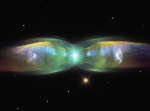 M2 9: Wings of a Butterfly Nebula
15.09.2013
Are stars better appreciated for their art after they die? Actually, stars usually create their most artistic displays as they die. In the case of low-mass stars like our Sun and M2-9 pictured above, the stars transform themselves from normal stars to white dwarfs by casting off their outer gaseous envelopes.
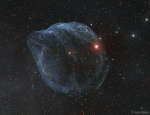 Sharpless 308: Star Bubble
20.12.2016
Blown by fast winds from a hot, massive star, this cosmic bubble is huge. Cataloged as Sharpless 2-308 it lies some 5,200 light-years away toward the constellation of the Big Dog (Canis Major) and covers slightly more of the sky than a full moon.
|
January February March April May June July August |
||||||||||||||||||||||||||||||||||||||||||||||||||||||||