
|
You entered: Earth
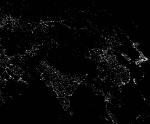 Asia at Night
28.07.1999
This is what Asia looks like at night! Can you find your favorite Asian city? Although not all of Asia is shown, city lights might make this task possible. The above picture is actually a composite of over 200 images made by satellites orbiting the Earth.
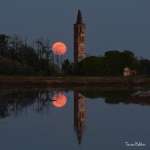 Full Flower Moonrise
9.05.2020
Rising as the Sun set, the Moon was bright and full in planet Earth skies on May 7 and known to some as a Flower Moon. Near the horizon it does seem to take on rose pink hues of reddened sunlight in this reflective twilight scene.
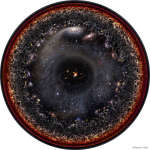 The Observable Universe
8.05.2018
How far can you see? Everything you can see, and everything you could possibly see, right now, assuming your eyes could detect all types of radiations around you -- is the observable universe. In visible...
 APOD: 2023 July 18 Б Milky Way above La Palma Observatory
18.07.2023
What's happening in the night sky? To help find out, telescopes all over the globe will be pointing into deep space. Investigations will include trying to understand the early universe, finding and tracking Earth-menacing asteroids, searching for planets that might contain extra-terrestrial life, and monitoring stars to help better understand our Sun.
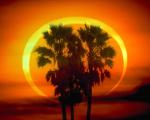 Annular Eclipse: The Ring of Fire
10.06.2002
Today, a few lucky people will see a "ring of fire." That's a name for the central view of an annular eclipse of the Sun by the Moon. At the peak of this...
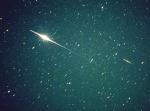 Iridium Flare
2.04.1998
Have you seen an Iridium flare? Satellites in low Earth orbit reflect sunlight and are often visible gliding across early evening and predawn skies. But sun glints from Iridium commercial digital communications satellites are providing the most spectacular sightings.
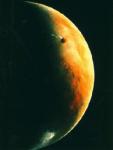 Barsoom
31.03.2001
"Yes, I have been to Barsoom again ..." begins John Carter in Edgar Rice Burroughs' 1913 science fiction classic "The Gods of Mars". In Burroughs' novels describing Carter's adventures on Mars, "Barsoom" is the local inhabitants' name for the Red Planet. Long after Burroughs' stories were published, Mars continues to inspire Earthdwellers' interests and imagination.
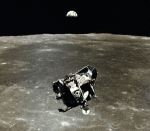 The Eagle Soars
21.07.1996
On July 21, 1969 Apollo 11 astronauts Neil A. Armstrong and Edwin E. "Buzz" Aldrin Jr. lifted off the lunar surface in the ascent stage of their lunar module dubbed "The Eagle" -- after becoming the first to walk on the moon.
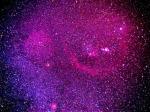 Orion: The Big Picture
1.12.1997
Orion is big. Some of the stars that form the constellation of Orion are part of a giant gas cloud complex that stretches over 100 light years and appears more than 50 times the diameter of the Moon.
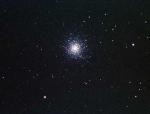 M13: The Great Globular Cluster in Hercules
19.08.1998
M13 is one of the most prominent and best known globular clusters. Visible with binoculars in the constellation of Hercules, M13 is frequently one of the first steps beyond the ordinary visible to the casual sky gazer.
|
January February March April May June July August September October |
|||||||||||||||||||||||||||||||||||||||||||||||||