
|
You entered: clouds
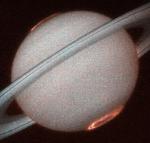 Saturnian Aurora
23.01.1999
Girdling the second largest planet in the Solar System, Saturn's Rings are one of the most spectacular sights for earthbound telescopes. This image from the orbiting Hubble Space Telescope's STIS instrument, offers a striking view of another kind of ring around Saturn - pole encircling rings of ultraviolet aurora.
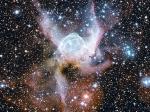 Thors Helmet from CFHT
30.01.2007
NGC 2359 is a striking emission nebula with an impressive popular name - Thor's Helmet Sure, its suggestive winged appearance might lead some to refer to it as the "duck nebula", but if you were a nebula which name would you choose?
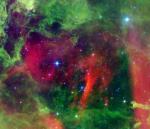 Hot Stars in the Rosette Nebula
26.07.2007
Winds and radiation from massive hot stars in the Rosette Nebula have cleared the natal gas and dust from the center of the nearby star-forming region. They also pose a danger to planet forming disks around young, cooler stars in the neighborhood.
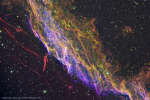 NGC 6992: Filaments of the Veil Nebula
1.12.2009
Wisps like this are all that remain visible of a Milky Way star. About 7,500 years ago that star exploded in a supernova leaving the Veil Nebula, also known as the Cygnus Loop.
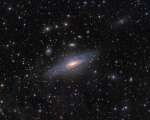 NGC 7331 and Beyond
12.08.2011
Big, beautiful spiral galaxy NGC 7331 is often touted as an analog to our own Milky Way. About 50 million light-years distant in the northern constellation Pegasus, NGC 7331 was recognized early on as a spiral nebula and is actually one of the brighter galaxies not included in Charles Messier's famous 18th century catalog.
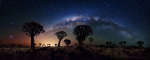 Milky Way Over Quiver Tree Forest
12.12.2012
In front of a famous background of stars and galaxies lies some of Earth's more unusual trees. Known as quiver trees, they are actually succulent aloe plants that can grow to tree-like proportions. The quiver tree name is derived from the historical usefulness of their hollowed branches as dart holders.
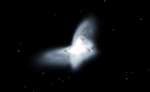 Galaxy Collisions: Simulation vs Observations
14.05.2013
What happens when two galaxies collide? Although it may take over a billion years, such titanic clashes are quite common. Since galaxies are mostly empty space, no internal stars are likely to themselves collide.
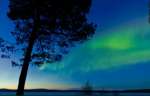 Time Lapse Auroras Over Norway
29.12.2013
Sometimes, after your eyes adapt to the dark, a spectacular sky appears. Such was the case in 2011 March when one of the largest auroral displays in recent years appeared over northern locations like the border between Norway and Russia.
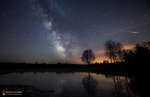 Halley Dust and Milky Way
9.05.2014
The early morning hours of May 6 were moonless when grains of cosmic dust streaked through dark skies. Swept up as planet Earth plows through dusty debris streams left behind periodic Comet Halley, the annual meteor shower is known as the Eta Aquarids.
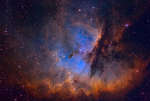 Portrait of NGC 281
4.11.2016
Look through the cosmic cloud cataloged as NGC 281 and you might miss the stars of open cluster IC 1590. Still, formed within the nebula that cluster's young, massive stars ultimately power the pervasive nebular glow.
|
January February March April May June July August September October |
|||||||||||||||||||||||||||||||||||||||||||||||||