
|
You entered: century
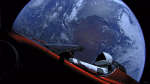 Car Orbiting Earth
13.02.2018
Last week, a car orbited the Earth. The car, created by humans and robots on the Earth, was launched by the SpaceX Company to demonstrate the ability of its Falcon Heavy Rocket to place spacecraft out in the Solar System.
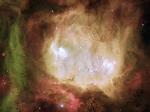 Halloween and the Ghost Head Nebula
31.10.2007
Halloween's origin is ancient and astronomical. Since the fifth century BC, Halloween has been celebrated as a cross-quarter day, a day halfway between an equinox (equal day / equal night) and a solstice (minimum day / maximum night in the northern hemisphere). With our modern calendar, however, the real cross-quarter day will occur next week.
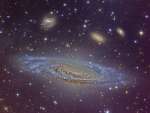 Beautiful Spiral NGC 7331
22.10.2008
A favorite target for astronomers, big, beautiful spiral galaxy NGC 7331 is one of the brighter galaxies not found in Charles Messier's famous 18th century catalog. About 50 million light-years distant...
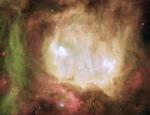 Halloween and the Ghost Head Nebula
31.10.2001
Halloween's origin is ancient and astronomical. Since the fifth century BC, Halloween has been celebrated as a cross-quarter day, a day halfway between an equinox (equal day / equal night) and a solstice (minimum day / maximum night in the northern hemisphere). With our modern calendar, however, the real cross-quarter day will occur next week.
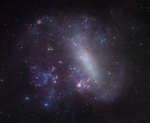 The Large Cloud of Magellan
19.12.2008
The 16th century Portuguese navigator Ferdinand Magellan and his crew had plenty of time to study the southern sky during the first circumnavigation of planet Earth. As a result, two fuzzy cloud-like objects easily...
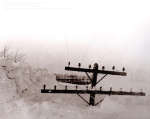 The Upper Michigan Blizzard of 1938
22.01.2014
Yes, but can your blizzard do this? In Upper Michigan's Storm of the Century in 1938, some snow drifts reached the level of utility poles. Nearly a meter of new and unexpected snow fell over two days in a storm that started 76 years ago tomorrow.
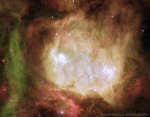 Halloween and the Ghost Head Nebula
30.10.2016
Halloween's origin is ancient and astronomical. Since the fifth century BC, Halloween has been celebrated as a cross-quarter day, a day halfway between an equinox (equal day / equal night) and a solstice (minimum day / maximum night in the northern hemisphere).
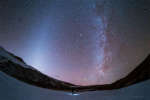 Dueling Bands in the Night
1.03.2022
What are these two bands in the sky? The more commonly seen band is the one on the right and is the central band of our Milky Way galaxy. Our Sun orbits...
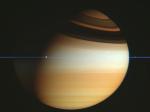 Cassini Spacecraft Crosses Saturns Ring Plane
4.05.2005
If this is Saturn, where are the rings? When Saturn's "appendages" disappeared in 1612, Galileo did not understand why. Later that century, it became understood that Saturn's unusual protrusions were rings and that when the Earth crosses the ring plane, the edge-on rings will appear to disappear.
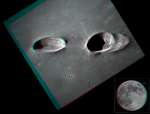 Messier Craters in Stereo
30.05.2015
Many bright nebulae and star clusters in planet Earth's sky are associated with the name of astronomer Charles Messier, from his famous 18th century catalog. His name is also given to these two large and remarkable craters on the Moon.
|
January February March April May June July August September |
|||||||||||||||||||||||||||||||||||||||||||||||||