
|
You entered: surface
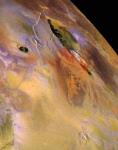 Zal Patera on Jupiter's Moon Io
7.03.2000
The Galileo orbiter's flyby of Io last November captured an unusual part of Jupiter's volcanic moon. From 26,000 kilometers away, Zal Patera was found to be a cauldron of flowing lava, gaseous vents, and tremendous peaks.
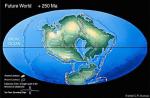 Pangea Ultima: Earth in 250 Million Years
2.10.2000
Is this what will become of the Earth's surface? The surface of the Earth is broken up into several large plates that are slowly shifting. About 250 million years ago, the plates...
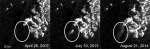 Mysterious Changing feature on Titan
15.10.2014
What is that changing object in a cold hydrocarbon sea of Titan? Radar images from the robotic Cassini spacecraft orbiting Saturn have been recording the surface of the cloud-engulfed moon Titan for years. When...
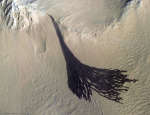 Dark Slope Streaks Split on Mars
18.07.2018
What is creating these dark streaks on Mars? No one is sure. Candidates include dust avalanches, evaporating dry ice sleds, and liquid water flows. What is clear is that the streaks occur through light surface dust and expose a deeper dark layer.
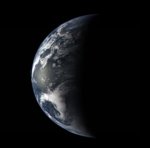 Leaving Earth
25.08.2019
What it would look like to leave planet Earth? Such an event was recorded visually in great detail by the MESSENGER spacecraft as it swung back past the Earth, eight years ago, on its way in toward the planet Mercury. Earth can be seen rotating in this time-lapse video, as it recedes into the distance.
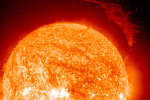 A Prominent Solar Prominence from SOHO
15.03.2009
What's happened to our Sun? It was sporting a spectacular -- but not very unusual -- solar prominence. A solar prominence is a cloud of solar gas held above the Sun's surface by the Sun's magnetic field.
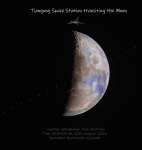 Tiangong Space Station Transits the Moon
25.08.2022
The rugged lunar south polar region lies at the top of this colorful portrait of a last quarter Moon made on August 20. Constructed from video frames and still images taken at Springrange, New South Wales, Australia it also captures a transit of China's Tiangong Space Station.
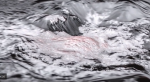 Salt Water Remnants on Ceres
1.09.2020
Does Ceres have underground pockets of water? Ceres, the largest asteroid in the asteroid belt, was thought to be composed of rock and ice. At the same time, Ceres was known to have unusual bright spots on its surface. These bright spots were clearly imaged during Dawn's exciting approach in 2015.
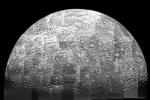 Outbound from Mercury
16.07.2002
After just passing Mercury, the robot spacecraft Mariner 10 looked back. The above picture is what it saw. Mercury, the closest planet to the Sun, is heavily cratered much like Earth's Moon.
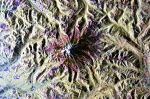 A Radar Image of Planet Earth
24.08.1995
This image of Mt. Rainier, Washington USA, planet Earth, was produced by the Spaceborne Radar Laboratory which flew on the Space Shuttle Endeavour in 1994. Radar, short for RAdio Detection And Ranging...
|
January February March April May June July August September October |
|||||||||||||||||||||||||||||||||||||||||||||||||