
|
You entered: stars
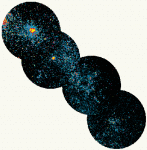 The UV SMC from UIT
20.12.1996
Translated from the "acronese" the title reads - The UltraViolet Small Magellanic Cloud from the Ultraviolet Imaging Telescope. FYI, the four ultraviolet images used in this mosaic of the nearby irregular galaxy known...
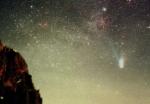 Hale-Bopp Brightest Comet This Decade
13.03.1997
The Great Comet of 1997 is now brighter than the Great Comet of 1996 ever was. In fact, it is brighter than almost every star in the sky. Yet Comet Hale-Bopp is still about two weeks away from maximum light.
 The Largest Rock Known
1.01.1998
There, that faint dot in the center - that's the largest rock known. It is larger than every known asteroid, moon, and comet nucleus. It is larger than any other rocky planet. (Nobody knows...
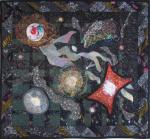 What the Hubble Saw
25.11.2004
In this striking 41 inch by 38 inch quilt, astronomy enthusiast Judy Ross has interpreted some of the Hubble Space Telescope's best galactic and extragalactic vistas. Featured in past APODs, clockwise from...
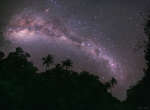 Mangaia's Milky Way
24.09.2011
From Sagittarius to Carina, the Milky Way Galaxy shines in this dark night sky above planet Earth's lush island paradise of Mangaia. Familiar to denizens of the southern hemisphere, the gorgeous skyscape includes the bulging galactic center at the upper left and bright stars Alpha and Beta Centauri just right of center.
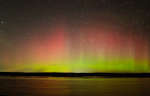 Nova Scotia Northern Lights
2.04.2022
This almost otherworldly display of northern lights was captured in clear skies during the early hours of March 31 from 44 degrees north latitude, planet Earth. In a five second exposure the scene looks north from Martinique Beach Provincial Park in Nova Scotia, Canada.
 APOD: 2023 October 30 Б Reflections of the Ghost Nebula
30.10.2023
Do any shapes seem to jump out at you from this interstellar field of stars and dust? The jeweled expanse, filled with faint, starlight-reflecting clouds, drifts through the night in the royal constellation of Cepheus.
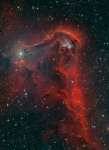 RCW 85
14.06.2024
From the 1960 astronomical catalog of Rodgers, Campbell and Whiteoak, emission region RCW 85 shines in southern night skies between bright stars Alpha and Beta Centauri. About 5,000 light years distant, the hazy interstellar cloud of glowing hydrogen gas and dust is faint.
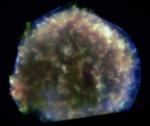 X Rays From Tycho s Supernova Remnant
12.09.2002
In 1572, Danish astronomer Tycho Brahe recorded the sudden appearance of a bright new star in the constellation Cassiopeia. The new star faded from view over a period of months and is believed to have been a supernova, one of the last stellar explosions seen in our Milky Way galaxy.
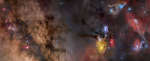 From the Galactic Plane through Antares
2.07.2018
Behold one of the most photogenic regions of the night sky, captured impressively. Featured, the band of our Milky Way Galaxy runs diagonally along the far left, while the colorful Rho Ophiuchus region including...
|
January February March April May June July August September October |
|||||||||||||||||||||||||||||||||||||||||||||||||