
|
You entered: Saturn
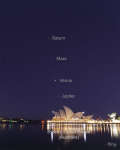 APOD: 2026 February 24 Б Planet Parade over Sydney Opera House
24.02.2026
Look up this week and see a whole bunch of planets. Just after sunset, looking west (mostly), planets Mercury, Venus, Saturn, and Jupiter will all be visible to the unaided eye simultaneously. If you have a telescope, planets Uranus and Neptune can also be seen.
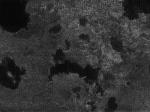 Possible Methane Lakes on Titan
31.07.2006
Have methane lakes been discovered on Saturn's Titan? That exciting possibility was uncovered from analyses of radar images returned last week by the robotic Cassini spacecraft now orbiting Saturn. The above image is a radar reflection from terrain near Titan's North Pole and spans a region about 200 kilometers across.
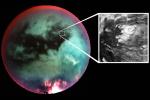 Titan s Cryovolcano
10.06.2005
Investigators suspect the domed feature detailed above is an ice volcano, or cryovolcano, seen in infrared light through the hazy atmosphere on Saturn's moon Titan. Since Titan's surface temperature is around -180...
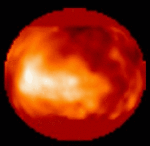 A Glimpse of Titan's Surface
21.10.1995
The surface of Titan, Saturn's largest moon, is normally hidden from view by its thick, hazy atmosphere. However, for the first time astronomers have been able to see surface features in images like the one above, made at near-infrared wavelengths with the Hubble Space Telescope.
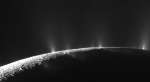 Cassini Flyby Shows Enceladus Venting
24.11.2009
What's happening on the surface of Saturn's moon Enceladus? Enormous ice jets are erupting. Giant plumes of ice have been photographed in dramatic fashion by the robotic Cassini spacecraft during this past weekend's flyby of Saturn's moon Enceladus.
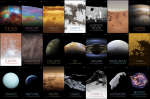 Posters of the Solar System
19.05.2020
Would you like a NASA astronomy-exploration poster? You are just one page-print away. Any of the panels you see on the featured image can appear on your wall. Moreover, this NASA page has, typically, several more posters of each of the Solar System objects depicted.
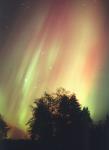 October Skylights
8.11.2000
With brilliant Venus above the western horizon at sunset and Jupiter and Saturn high in the east by early evening, November's night sky is filled with bright planets. October's sky featured bright planets as well and, triggered by the active Sun, some lovely auroral displays.
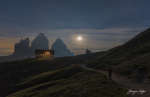 The Moon and Jupiter over the Alps
2.09.2019
What are those bright lights in the sky ahead? When hiking a high mountain pass in northern Italy three weeks ago, a conjunction between our Moon and the distant planet Jupiter was visible as both rose together in the southwest after sunset.
 Earthrise
24.12.2005
In December of 1968, the Apollo 8 crew flew from the Earth to the Moon and back again. Frank Borman, James Lovell, and William Anders were launched atop a Saturn V rocket on December 21, circled the Moon ten times in their command module, and returned to Earth on December 27.
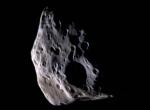 Small Moon Epimetheus
29.04.2005
Small saturnian moon Epimetheus (ep-ee-MEE-thee-us) is at most 116 kilometers across. Its cratered surface and irregular shape are highlighted by dramatic shadows in this composite close-up image from the Cassini spacecraft. However, orbiting 91,000 kilometers above Saturn's cloud tops, Epimetheus is not alone.
|
January February March April May June July August September October |
|||||||||||||||||||||||||||||||||||||||||||||||||