
|
You entered: dark
 Orion and the Ocean of Storms
13.12.2025
On December 5, 2022, a camera on board the uncrewed Orion spacecraft captured this view as Orion approached its return powered flyby of the Moon. Beyond one of Orion's extended solar arrays lies dark, smooth, terrain along the western edge of the Oceanus Procellarum.
 Light Bridges on the Sun
22.05.2000
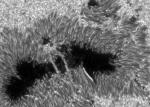
Bridges the length of a planet can form on the Sun in a matter of hours. Known as light bridges, these structures may form as large sunspot groups decay. Above, one of the sharpest photographs of the Sun ever taken shows two such light bridges that appeared late last month.
 22 Miles From Eros
3.08.2000
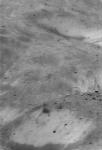
Last month the NEAR Shoemaker spacecraft swooped closer to Eros, orbiting only 22 miles (36 kilometers) from the center of the asteroid. These two images taken on July 19 (left) and July 24 (right)...
 The Mineral Moon
29.08.2003
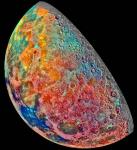
Even if the Moon really were made of green cheese it probably wouldn't look this bizarre. Still, this mosaic of 53 images was recorded by the Jupiter-bound Galileo spacecraft as it passed near our own large natural satellite in 1992.
 Last Look at Plutos Charon Side
13.07.2015
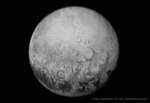
Pluto surface is strange. As the robotic New Horizons barrels toward its closest approach to Pluto and its moons tomorrow, images already coming back show Pluto's surface to be curiouser and curiouser. The featured image, taken two days ago, shows the side of Pluto that always faces Pluto's largest moon Charon.
 Reflections on the 1970s
13.01.2016
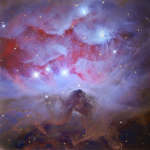
The 1970s are sometimes ignored by astronomers, like this beautiful grouping of reflection nebulae in Orion - NGC 1977, NGC 1975, and NGC 1973 - usually overlooked in favor of the substantial glow from the nearby stellar nursery better known as the Orion Nebula.
 North America and the Pelican
8.09.2022
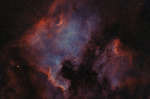
Fans of our fair planet might recognize the outlines of these cosmic clouds. On the left, bright emission outlined by dark, obscuring dust lanes seems to trace a continental shape, lending the popular name North America Nebula to the emission region cataloged as NGC 7000.
 A Year of Resolving Backgrounds
30.12.2000
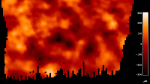
No matter which direction you look, no matter what type of light you see, the sky glows - but why? The sources of many of these background radiations have remained long-standing puzzles, but this millennial year brought some partial resolutions.
 Abell 1689 Warps Space
9.01.2003
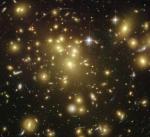
Two billion light-years away, galaxy cluster Abell 1689 is one of the most massive objects in the Universe. In this view from the Hubble Space Telescope's Advanced Camera for Surveys, Abell...
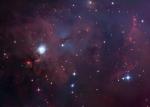 NGC 1999: South of Orion
30.01.2006
South of the large star-forming region known as the Orion Nebula, lies bright blue reflection nebula NGC 1999. The nebula is marked with a dark inverted T-shape at the lower left in a broad cosmic vista that spans over 10 light-years.
|
January February March April May June July August September |
|||||||||||||||||||||||||||||||||||||||||||||||||