
|
You entered: color
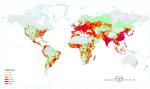 Where People Live on Planet Earth
5.03.2003
Where do people live on Planet Earth? Although people inhabit every continent, the highest population densities occur in Asia. Sparsely inhabited regions occur on virtually every continent, however, including the Sahara Desert in Africa...
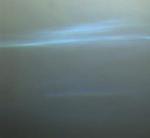 Ice Clouds over Mars
13.10.1997
Mars has clouds too. The above true color image taken in August by Mars Pathfinder shows clouds of ice high in the Martian atmosphere. Unlike Earth's atmosphere which is composed predominantly of nitrogen and oxygen, Mars' atmosphere is composed mostly of carbon dioxide.
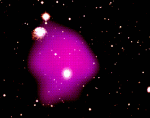 Hot Gas and Dark Matter
2.09.1995
Is the gravity of the above galaxies high enough to contain the glowing hot gas? Superposed on an optical picture of a group of galaxies is an image taken in X-ray light. The X-ray...
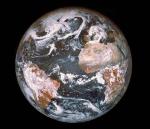 An Earth Ornament
25.12.1999
The Apollo 8 astronauts spent the 1968 Christmas Season orbiting the Moon, returning with striking images of both Moon and Earth from space - pictures which inspired the world. While in lunar orbit...
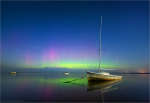 Calm Waters and Geomagnetic Storm
9.09.2017
Very recognizable stars of the northern sky are a backdrop for calm waters in this moonlit sea and skyscape off Cape Cod, Massachusetts. Taken on September 7, the photo also records a colorful display of northern lights or aurora borealis triggered by a severe geomagnetic storm.
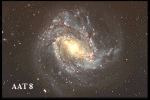 Spiral Galaxy M83
12.09.1995
Long winding spiral arms are clearly evident on this spectacular picture of the spiral galaxy M83. The blue color of the spiral arms is caused by the relatively large fraction of young blue stars there. Dark dust lanes are mixed in with the stars and trace the spiral structure of the galaxy.
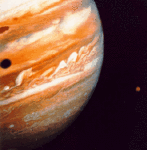 Jupiter, Io, and Ganymede's Shadow
13.10.1995
Jupiter, the solar system's largest planet, is seen here next to Io, its closest Galilean moon. On the cloud tops of Jupiter near the left edge of the picture can be seen a dark circular spot which is caused by the shadow of Jupiter's largest moon Ganymede.
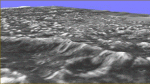 A Flyby View of Ganymede
25.10.1996
This is what it would look like to fly over the surface of Jupiter's moon Ganymede. NASA's robot spacecraft Galileo recently approached only 6000 miles from this frozen ice-ball of a moon. The above image is a digital reconstruction from two images taken during this flyby.
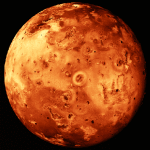 Io: A Volcanic Moon
3.08.1995
In 1610, Galileo turned his telescope to the heavens and discovered that the planet Jupiter had four bright moons. The innermost of these Galilean moons, Io, turned out to be one of the most exotic objects in the solar system.
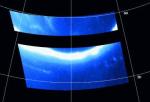 An Auroral Ring on Jupiter
9.06.1997
Do other planets have aurora? Terrestrial and spacecraft observations have found evidence for aurora on Venus, Mars, Jupiter, Saturn, Uranus, and Neptune. In the above false-color photograph, a good portion of an auroral ring was captured recently in optical light by the Galileo spacecraft in orbit around Jupiter.
|
January February March April May June July August September October |
|||||||||||||||||||||||||||||||||||||||||||||||||