
|
You entered: surface
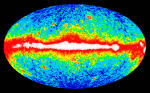 Gamma Ray Sky Map
23.06.1995
What if you could "see" gamma rays? This computer processed image represents a map of the entire sky at photon energies above 100 million electron Volts. These gamma-ray photons are more than 40 million times more energetic than visible light photons and are blocked from the Earth's surface by the atmosphere.
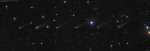 Rosetta and Comet Outbound
28.11.2015
Not a bright comet, 67P/Churyumov-Gerasimenko now sweeps slowly through planet Earth's predawn skies near the line-up of planets along the ecliptic. Still, this composite of telescopic images follows the comet's progress as it moves away from the Sun beyond the orbit of Mars, from late September (left) through late November (far right).
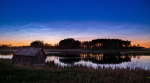 Northern Summer Twilight
19.06.2021
Nights grow shorter and days grow longer as the summer solstice approaches in the north. Usually seen at high latitudes in summer months, noctilucent or night shining clouds begin to make their appearance. Drifting...
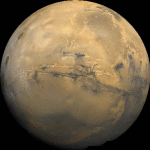 The Exploration of Mars
16.07.1995
Thirty years ago NASA's exploration of Mars began. In July of 1965 the Mariner 4 spacecraft flew within 6,000 miles of Mars and returned 21 pictures of the mysterious red planet. NASA...
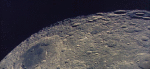 Lunar Farside from Apollo 13
7.07.1995
In April of 1970, after an explosion damaged their spacecraft, the Apollo 13 astronauts were forced to abandon their plans to make the third manned lunar landing. Still, while coasting around the moon in their desperate attempt to return to earth they were able to photograph the moon's far side.
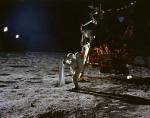 Apollo 11: Catching Some Sun
20.09.2003
Bright sunlight glints and long dark shadows dramatize this image of the lunar surface taken by Apollo 11 astronaut Neil Armstrong, the first to walk on the Moon. Pictured is the mission's lunar...
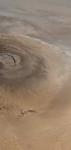 Olympus Mons From Orbit
19.10.1998
Olympus Mons on Mars is the largest volcano in the Solar System. Although three times higher than Earth's Mount Everest, Olympus Mons would not be difficult to climb because of the volcano's great breadth.
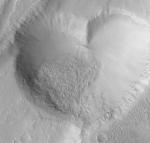 From Mars with Love
28.06.1999
Are Martians trying to tell us something? An indentation has been recently photographed on Mars that resembles a heart, a common human symbol for love. Because intelligent Martians have never been known to exist...
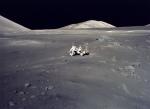 Apollo 17 Lunarscape: A Magnificent Desolation
9.11.2003
Buzz Aldrin, Apollo 11 Lunar Module pilot and the second human to walk on the Moon, described the lunar landscape as "a magnificent desolation". Dramatic pictures from the Apollo missions to the lunar surface testify to this apt turn of phrase.
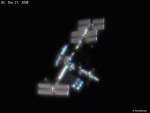 ISS: Reflections of Earth
16.01.2009
Remarkable details are visible in this view of the orbiting International Space Station (ISS), recorded with a small telescope on planet Earth through a clear twilight sky. Seen on December 27th at about...
|
January February March April May June July August September October |
|||||||||||||||||||||||||||||||||||||||||||||||||