
|
You entered: background
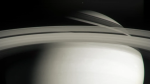 Views from Cassini at Saturn
13.06.2011
What has the Cassini orbiter seen since arriving at Saturn? The above music video shows some of the highlights. In the first time-lapse sequence (00:07), a vertical line appears that is really Saturn's thin rings seen nearly edge-on. Soon some of Saturn's moon shoot past.
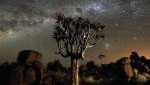 Namibian Nights
4.02.2013
Namibia has some of the darkest nights visible from any continent. It is therefore home to some of the more spectacular skyscapes, a few of which have been captured in the above time-lapse video.
 APOD: 2024 October 20 Б Dark Matter in a Simulated Universe
20.10.2024
Is our universe haunted? It might look that way on this dark matter map. The gravity of unseen dark matter is the leading explanation for why galaxies rotate so fast, why galaxies orbit clusters...
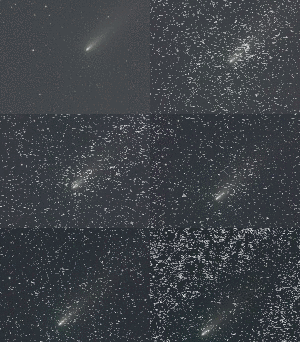 Comet Schwassmann Wachmann 3 Passes the Earth
23.05.2006
Rarely does a comet pass this close to Earth. Last week, dedicated astrofilmographers were able to take advantage of the close approach of crumbling 73P / Comet Schwassmann-Wachmann 3 to make time-lapse movies of the fast-moving comet. Large comet fragments passed about 25 times the Moon's distance from the Earth.
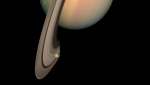 Cassini Approaches Saturn
19.04.2020
What would it look like to approach Saturn in a spaceship? One doesn't have to just imagine -- the Cassini spacecraft did just this in 2004, recording thousands of images along the way, and hundreds of thousands more since entering orbit.
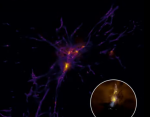 Simulation: Formation of the First Stars
30.06.2021
How did the first stars form? To help find out, the SPHINX computer simulation of star formation in the very early universe was created, some results of which are shown in the featured video. Time since the Big Bang is shown in millions of years on the upper left.
 Balloon TIGER
1.02.2002
Where does a two-ton tiger hang out? Well, in this case the Trans-Iron Galactic Element Recorder (TIGER) experiment hangs from a mobile crane on the far left in this panorama photo recorded last December near McMurdo Station, Antarctica.
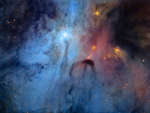 IC 4603: Reflection Nebula in Ophiuchius
23.07.2014
Why does this starfield photograph resemble an impressionistic painting? The effect is created not by digital trickery but by large amounts of interstellar dust. Dust, minute globs rich in carbon and similar in size to cigarette smoke, frequently starts in the outer atmospheres of large, cool, young stars.
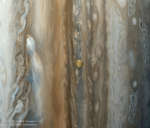 Io over Jupiter from Voyager 1
4.09.2016
Back in 1979, NASA's Voyager 1 spacecraft flew past Jupiter and its moons. The images in this mosaic, featuring the moon Io against a background of gas giant Jupiter's diffuse swirling cloud bands, were recorded by Voyager's camera from a distance of about 8.3 million kilometers.
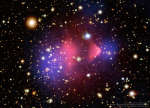 The Matter of the Bullet Cluster
15.01.2017
What's the matter with the Bullet Cluster? This massive cluster of galaxies (1E 0657-558) creates gravitational lens distortions of background galaxies in a way that has been interpreted as strong evidence for the leading theory: that dark matter exists within.
|
January February March April May June July August September |
|||||||||||||||||||||||||||||||||||||||||||||||||