
|
You entered: century
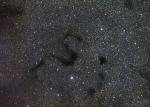 Snake in the Dark
20.06.2003
Dark nebulae snake across a gorgeous expanse of stars in this wide-field view toward the pronounceable constellation Ophiucus and the center of our Milky Way Galaxy. In fact, the central S-shape seen here is well known as the Snake Nebula.
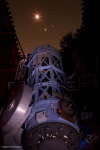 The 60 inch Reflector
13.12.2008
On the night of December 13, 1908, 100 years ago today, the 60-inch diameter reflecting telescope of Mount Wilson Observatory was first tested on the stars. It became the first successful large reflecting telescope.
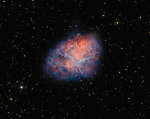 M1: The Crab Nebula
20.11.2014
The Crab Nebula is cataloged as M1, the first object on Charles Messier's famous 18th century list of things which are not comets. In fact, the Crab is now known to be a supernova remnant, debris from the death explosion of a massive star, witnessed by astronomers in the year 1054.
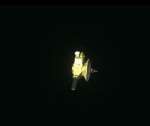 New Horizons
22.06.2015
In three weeks, the robotic New Horizons spacecraft will reach Pluto. As the featured video makes clear, though, humanity has been on an unprecedented epoch of robotic exploration of our Solar System's planets for the past half century.
 Messier 81
17.04.2019
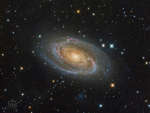
One of the brightest galaxies in planet Earth's sky is similar in size to our Milky Way Galaxy: big, beautiful Messier 81. Also known as NGC 3031 or Bode's galaxy for its 18th century discoverer, this grand spiral can be found toward the northern constellation of Ursa Major, the Great Bear.
 A Sagittarius Triplet
10.07.2024
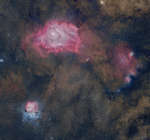
These three bright nebulae are often featured on telescopic tours of the constellation Sagittarius and the crowded starfields of the central Milky Way. In fact, 18th century cosmic tourist Charles Messier cataloged two of them; M8, the large nebula above center, and colorful M20 below and left in the frame.
 Leonids Above Torre de la Guaita
26.11.2000
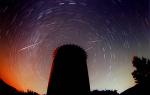
Last year, the 1999 Leonids Meteor Shower came to a tremendous crescendo. Observers in Europe observed a sharp peak in the number of meteors visible around 0210 UTC during the early morning hours of November 18. Meteor counts then exceeded 1000 per hour - the minimum needed to define a true meteor storm.
 The Milky Road
20.10.2007
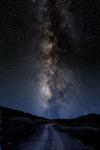
Inspired during a visit to Fort Davis, Texas, home of McDonald Observatory and dark night skies, photographer Larry Landolfi created this tantalizing fantasy view. The composited image suggests the Milky Way is a heavenly extension of a deserted country road.
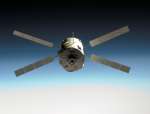 Jules Verne in Orbit
5.04.2008
The bright edge of planet Earth fades into the darkness of space in the background of this view of Jules Verne on an extraordinary voyage. Snapped last Monday, the picture shows the European Space...
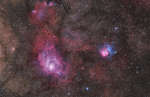 A Sagittarius Triplet
1.06.2012
These three bright nebulae are often featured in telescopic tours of the constellation Sagittarius and the crowded starfields of the central Milky Way. In fact, 18th century cosmic tourist Charles Messier cataloged two of them; M8, the large nebula left of center, and colorful M20 on the right.
|
January February March April May June July August September |
|||||||||||||||||||||||||||||||||||||||||||||||||