
|
You entered: color
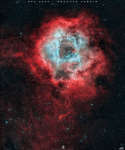 Roses are Red
14.02.2026
Roses are red, nebulas are too, and this Valentine's gift is a stunning view! Pictured is a loving look at the Rosette Nebula (NGC 2237): a cosmic bloom of bright young stars sitting atop a stem of glowing hot gas.
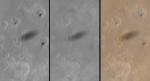 The Shadow of Phobos
29.03.2003
Hurtling through space above the Red Planet, potato-shaped Phobos completes an orbit of Mars in less than eight hours. In fact, since its orbital period is shorter than the planet's rotation period, Mars-based...
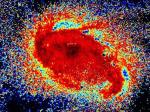 Comet-like Clouds in the Cartwheel Galaxy
28.11.1996
In a cartwheel-shaped galaxy far, far away, huge comet-shaped clouds of gas have been discovered racing through the nucleus at about 700,000 miles per hour. The aptly named Cartwheel Galaxy is actually about 500 million light years distant, its suggestive shape created by a head-on collision with a smaller galaxy.
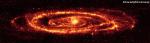 The Andromeda Galaxy in Infrared
20.10.2005
What is the Andromeda galaxy really like? To find out, astronomers looked at our largest galactic neighbor in a different light: infrared. Astronomers trained the orbiting Spitzer Space Telescope at the Messier monster (M31) for over 18 hours, creating a mosaic that incorporated 11,000 separate exposures.
 Twelve Lunar Eclipses
29.02.2008
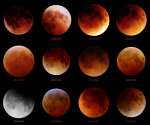
Welcome to the extra day in the Gregorian Calendar's leap year 2008! To celebrate, consider this grid of lunar eclipse pictures - starting in leap year 1996 and ending with February's eclipse - with the date in numerical year/month/day format beneath each image.
 Thor s Helmet
5.06.2010
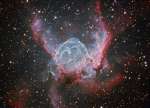
This helmet-shaped cosmic cloud with wing-like appendages is popularly called Thor's Helmet. Heroically sized even for a Norse god, Thor's Helmet is about 30 light-years across. In fact, the helmet is actually...
 Sunset from the International Space Station
23.06.2010
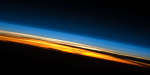
What are these strange color bands being seen from the International Space Station? The Sun setting through Earth's atmosphere. Pictured above, a sunset captured last month by the ISS's Expedition 23 crew shows in vivid detail many layers of the Earth's thin atmosphere.
 Shaping NGC 6188
16.07.2010
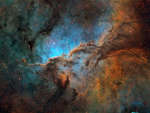
Dark shapes with bright edges winging their way through dusty NGC 6188 are tens of light-years long. The emission nebula is found near the edge of an otherwise dark large molecular cloud in the southern constellation Ara, about 4,000 light-years away.
 Centaurus A
4.04.2012
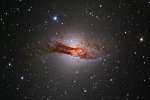
What's the closest active galaxy to planet Earth? That would be Centaurus A, only 11 million light-years distant. Spanning over 60,000 light-years, the peculiar elliptical galaxy is also known as NGC 5128.
 Rosetta Approaches Asteroid Lutitea
24.04.2012
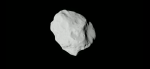
What would it look like to approach an asteroid in a spaceship? In 2010, ESA's robotic Rosetta spacecraft zipped past the asteroid 21 Lutetia taking data and snapping images in an effort to better determine the history of the asteroid and the origin of its unusual colors.
|
January February March April May June July August September October |
|||||||||||||||||||||||||||||||||||||||||||||||||