
|
You entered: galaxies
 Columbia Waits, Discovery Launches
8.08.1995
Space Shuttle Discovery launches while the Space Shuttle Columbia is readied for a future mission. Space shuttles are launched from the Kennedy Space Center in Florida. At this date there are four operating space shuttles: Atlantis, Columbia, Discovery, and Endeavour. This mission is most famous for carrying the Hubble Space Telescope into orbit.
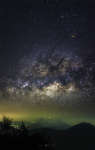 Milky Way over Erupting Volcano
13.04.2015
The view was worth the trip. Battling high winds, cold temperatures, and low oxygen, the trek to near the top of the volcano Santa Maria in Guatemala -- while carrying sensitive camera equipment -- was lonely and difficult. Once set up, though, the camera captured this breathtaking vista during the early morning hours of February 28.
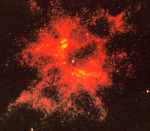 NGC 2440 Nucleus: The Hottest Star?
30.11.1995
In the center of the above photograph lies a star with one of the hottest surface temperatures yet confirmed. This bright white dwarf star's surface has been measured at greater than 200,000 degrees Celsius - more than 30 times hotter than that of our own Sun.
 Milky Way Above Easter Island
18.06.2012
Why were the statues on Easter Island built? No one is sure. What is sure is that over 800 large stone statues exist there. The Easter Island statues, stand, on the average, over twice as tall as a person and have over 200 times as much mass.
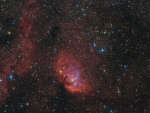 The Tulip in the Swan
21.09.2019
Framing a bright emission region, this telescopic view looks out across a pretty field of stars along the plane of our Milky Way Galaxy, toward the nebula rich constellation Cygnus the Swan. Popularly called...
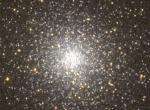 Globular Cluster 47 Tucanae
7.11.1998
Stars come in bunches. Of the over 200 globular star clusters that orbit the center of our Milky Way Galaxy, 47 Tucanae is the second brightest globular cluster (behind Omega Centauri). Known to some affectionately as 47 Tuc or NGC 104, it is only visible from the Southern
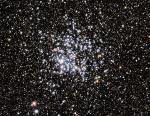 M11: The Wild Duck Cluster
22.01.2003
Many stars like our Sun were formed in open clusters. The above pictured open cluster, M11, contains thousands of stars and is just over five thousand light years distant. The stars in this cluster all formed together about 250 million years ago. The bright young stars in M11 appear blue.
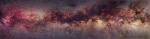 A Milky Way Band
5.06.2005
Most bright stars in our Milky Way Galaxy reside in a disk. Since our Sun also resides in this disk, these stars appear to us as a diffuse band that circles the sky.
 APOD: 2024 July 29 Б Milky Way over Uluru
29.07.2024
What's happening above Uluru? A United Nations World Heritage Site, Uluru is an extraordinary 350-meter high mountain in central Australia that rises sharply from nearly flat surroundings. Composed of sandstone, Uluru has slowly formed over the past 300 million years as softer rock eroded away.
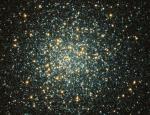 Globular Cluster M3
15.09.2003
This huge ball of stars predates our Sun. Long before humankind evolved, before dinosaurs roamed, and even before our Earth existed, ancient globs of stars condensed and orbited a young Milky Way Galaxy.
|
January February March April May June July August September October |
|||||||||||||||||||||||||||||||||||||||||||||||||