
|
You entered: NASA
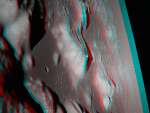 Apollo 17: A Stereo View from Lunar Orbit
23.02.2018
Get out your red/blue glasses and check out this awesome stereo view of another world. The scene was recorded by Apollo 17 mission commander Eugene Cernan on December 11, 1972, one orbit before descending to land on the Moon.
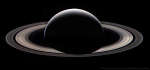 Saturn at Night
20.09.2019
Still bright in planet Earth's night skies, good telescopic views of Saturn and its beautiful rings often make it a star at star parties. But this stunning view of Saturn's rings and night side just isn't possible from telescopes closer to the Sun than the outer planet.
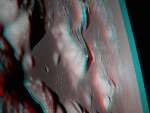 Apollo 17: A Stereo View from Lunar Orbit
17.01.2020
Get out your red/blue glasses and check out this awesome stereo view of another world. The scene was recorded by Apollo 17 mission commander Eugene Cernan on December 11, 1972, one orbit before descending to land on the Moon.
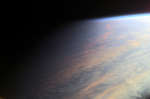 Planet Earth at Twilight
22.04.2020
No sudden, sharp boundary marks the passage of day into night in this gorgeous view of ocean and clouds over our fair planet Earth. Instead, the shadow line or terminator is diffuse and shows the gradual transition to darkness we experience as twilight.
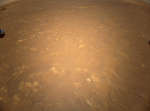 Perseverance from Ingenuity
1.05.2021
Flying at an altitude of 5 meters (just over 16 feet), on April 25 the Ingenuity helicopter snapped this sharp image. On its second flight above the surface of Mars, its color camera was looking back toward Ingenuity's current base at Wright Brothers Field and Octavia E.
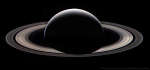 Saturn at Night
11.09.2021
Still bright in planet Earth's night skies, good telescopic views of Saturn and its beautiful rings often make it a star at star parties. But this stunning view of Saturn's rings and night side just isn't possible from telescopes closer to the Sun than the outer planet.
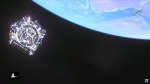 James Webb Space Telescope over Earth
26.12.2021
There's a big new telescope in space. This one, the James Webb Space Telescope (JWST), not only has a mirror over five times larger than Hubble's in area, but can see better in infrared light.
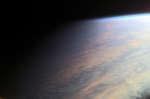 Planet Earth at Twilight
22.04.2022
No sudden, sharp boundary marks the passage of day into night in this gorgeous view of ocean and clouds over our fair planet Earth. Instead, the shadow line or terminator is diffuse and shows the gradual transition to darkness we experience as twilight.
 America and the Sea of Serenity
10.12.2022
Get out your red/blue glasses and check out this stereo view of another world. Fifty years ago the scene was recorded by Apollo 17 mission commander Eugene Cernan on December 11, 1972, one orbit before descending to land on the Moon.
 Apollo 12 and Surveyor 3
15.11.2024
Put on your red/blue glasses and gaze across the western Ocean of Storms on the surface of the Moon. The 3D anaglyph features Apollo 12 astronaut Pete Conrad visiting the Surveyor 3 spacecraft in November of 1969.
|
January February March April May June July August September October |
|||||||||||||||||||||||||||||||||||||||||||||||||