
|
You entered: NASA
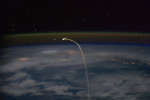 Shuttle Reentry Streak from Orbit
1.08.2011
What's that strange bright streak? It is the last image ever of a space shuttle from orbit. A week and a half ago, after decoupling from the International Space Station, the Space Shuttle Atlantis fired its rockets for the last time, lost its orbital speed, and plummeted back to Earth.
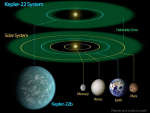 APOD: 2011 December 7 Kepler 22b: An Almost Earth Orbiting an Almost Sun
7.12.2011
Its the closest match to Earth that has yet been found. Recently discovered planet Kepler 22b has therefore instantly become the best place to find life outside our Solar System. The planet's host...
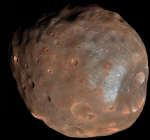 Phobos: Doomed Moon of Mars
28.10.2012
This moon is doomed. Mars, the red planet named for the Roman god of war, has two tiny moons, Phobos and Deimos, whose names are derived from the Greek for Fear and Panic. These...
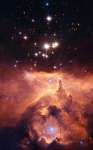 NGC 6357s Cathedral to Massive Stars
18.11.2012
How massive can a normal star be? Estimates made from distance, brightness and standard solar models had given one star in the open cluster Pismis 24 over 200 times the mass of our Sun, nearly making it the record holder.
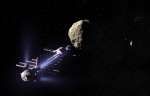 Gravitational Tractor
21.02.2013
How would you change the course of an Earth-threatening asteroid? One possibility - a massive spacecraft that uses gravity as a towline - is illustrated in this artist's vision of a gravitational tractor in action.
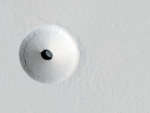 A Hole in Mars
9.03.2014
What created this unusual hole in Mars? The hole was discovered by chance in 2011 on images of the dusty slopes of Mars' Pavonis Mons volcano taken by the HiRISE instrument aboard the robotic Mars Reconnaissance Orbiter currently circling Mars.
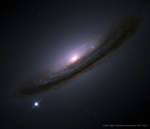 Supernova 1994D and the Unexpected Universe
31.05.2015
Long ago, far away, a star exploded. Supernova 1994D, visible as the bright spot on the lower left, occurred in the outskirts of disk galaxy NGC 4526. Supernova 1994D was not of interest for how different it was, but rather for how similar it was to other supernovae.
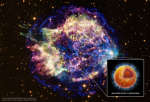 Cooling Neutron Star
1.05.2017
The bright source near the center is a neutron star, the incredibly dense, collapsed remains of a massive stellar core. Surrounding it is supernova remnant Cassiopeia A (Cas A), a comfortable 11,000 light-years away. Light from the Cas A supernova, the death explosion of a massive star, first reached Earth about 350 years ago.
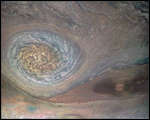 North North Temperate Zone Little Red Spot
4.08.2017
On July 11, the Juno spacecraft once again swung near the turbulent Jovian cloud tops. On its seventh orbital closest approach this perijove passage brought Juno within 3,500 kilometers of the Solar System's largest planetary atmosphere.
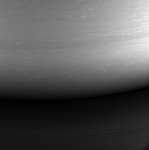 Cassini s Final Image
16.09.2017
As planned, the Cassini spacecraft impacted the upper atmosphere of Saturn on September 15, after a 13 year long exploration of the Saturnian System. With spacecraft thrusters firing until the end, its atmospheric entry followed an unprecedented series of 22 Grand Finale dives between Saturn and rings.
|
January February March April May June July August September October |
|||||||||||||||||||||||||||||||||||||||||||||||||