
|
You entered: dark
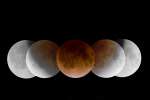 The Umbra of Earth
15.12.2011
The dark, inner shadow of planet Earth is called the umbra. Shaped like a cone extending into space, it has a circular cross section most easily seen during a lunar eclipse. For example, last Saturday the Full Moon slid across the southern half of Earth's umbral shadow, entertaining moonwatchers around much of the planet.
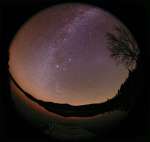 Zodiacal Light and Milky Way
20.10.2012
Ghostly apparitions of two fundamental planes in planet Earth's sky span this October all-sky view. The scene was captured from a lakeside campsite under dark skies in northern Maine, USA. In it, the plane of our Milky Way Galaxy arcs above faint airglow along the horizon.
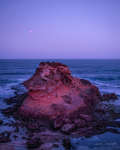 Red Planet Red Moon and Mars
9.08.2018
Mars is also known as The Red Planet, often seen with a reddish tinge in dark night skies. Mars shines brightly at the upper left of this gorgeous morning twilight view from Mornington Peninsula, Victoria, Australia, but the Moon and planet Earth look redder still. Taken on July 27, the totally eclipsed Moon is setting.
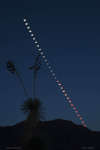 Total Lunar Eclipse at Moonset
19.01.2019
The Moon slid through Earth's shadow on January 31, 2018 in a total lunar eclipse. In this time-lapse sequence of that eclipse from Portal, Arizona, USA, the partial eclipse starts with the Moon high in the western sky.
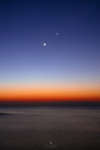 Venus, Mercury, and the Waning Moon
14.11.2020
Yesterday, early morning risers around planet Earth were treated to a waning Moon low in the east as the sky grew bright before dawn. From the Island of Ortigia, Syracuse, Sicily, Italy this simple snapshot found the slender sunlit crescent just before sunrise.
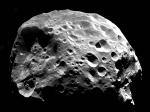 Phoebe: Comet Moon of Saturn
12.02.2006
Was Saturn's moon Phoebe once a comet? Images from the robotic Cassini spacecraft taken two years ago when entering the neighborhood of Saturn indicate that Phoebe may have originated in the outer Solar System.
 M78 and Reflecting Dust Clouds in Orion
18.03.2008
An eerie blue glow and ominous columns of dark dust highlight M78 and other bright reflection nebula in the constellation of Orion. The dark filamentary dust not only absorbs light, but also reflects the light of several bright blue stars that formed recently in the nebula.
 Double Cluster in Perseus
3.01.2009
Some 7,000 light-years away, this pair of open or galactic star clusters is an easy binocular target, a lovely starfield in the northern constellation Perseus. Also visible to the unaided eye from dark sky areas, it was cataloged in 130 BC by Greek astronomer Hipparchus.
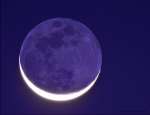 The New Moon in the Old Moon s Arms
24.03.2012
Also known as the Moon's ashen glow, Earthshine is Earthlight illuminating the Moon's night side. Taken on Nowruz, the March 20 equinox, from Esfahan, Iran, planet Earth, this telescopic image captures strong Earthshine from an old Moon. The darker earthlit disk is in the arms of a bright sunlit crescent.
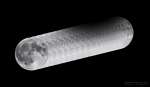 Caterpillar Moon
24.05.2013
A close series of consecutive exposures are combined in this intriguing composite of the Full Moon slowly crawling, across the sky. Beginning on the upper right at 19:42 UT and ending...
|
January February March April May June July August September |
|||||||||||||||||||||||||||||||||||||||||||||||||