
|
You entered: Earth
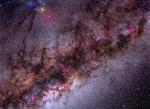 Our Galaxy in Stars, Gas, and Dust
27.09.1999
The disk of our Milky Way Galaxy is home to hot nebulae, cold dust, and billions of stars. The red nebulae visible in the above contrast-enhanced picture are primarily emission nebulae, glowing clouds of hydrogen gas heated by nearby, bright, young stars.
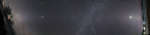 All Planets Panorama
25.02.2017
For 360 degrees, a view along the plane of the ecliptic is captured in this remarkable panorama, with seven planets in a starry sky. The mosaic was constructed using images taken during January 24-26, from Nacpan Beach, El Nido in Palawan, Philippines.
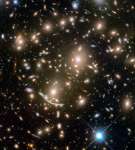 Galaxy Cluster Abell 370 and Beyond
6.05.2017
Some 4 billion light-years away, massive galaxy cluster Abell 370 only appears to be dominated by two giant elliptical galaxies and infested with faint arcs in this sharp Hubble Space Telescope snapshot. The fainter...
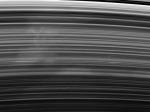 Mysterious Spokes in Saturns Rings
27.11.2006
What causes the mysterious spokes in Saturn's rings? Visible on the left of the above image as ghostlike impressions, spokes were first discovered by the Voyager spacecraft that buzzed by Saturn in the early 1980s. Their existence was unexpected, and no genesis hypothesis has ever become accepted.
 Galaxy Cluster Abell 370 and Beyond
12.09.2023
Some 4 billion light-years away, massive galaxy cluster Abell 370 is captured in this sharp Hubble Space Telescope snapshot. The cluster of galaxies only appears to be dominated by two giant elliptical galaxies and infested with faint arcs.
 APOD: 2023 September 27 Б STEVE and Milky Way Cross over Rural Road
27.09.2023
Not every road ends in a STEVE. A week ago, a sky enthusiast's journey began with a goal: to photograph an aurora over Lake Huron. Driving through rural Ontario, Canada, the forecasted sky show started unexpectedly early, causing the photographer to stop before arriving at the scenic Great Lake.
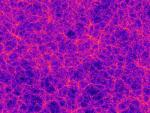 The Universe in Hot Gas
20.08.2002
Where is most of the normal matter in the Universe? Recent observations from the Chandra X-ray Observatory confirm that it is in hot gas filaments strewn throughout the universe. "Normal matter" refers to known elements and familiar fundamental particles.
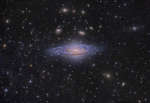 NGC 7331 and Beyond
17.12.2014
Big, beautiful spiral galaxy NGC 7331 is often touted as an analog to our own Milky Way. About 50 million light-years distant in the northern constellation Pegasus, NGC 7331 was recognized early on as a spiral nebula and is actually one of the brighter galaxies not included in Charles Messier's famous 18th century catalog.
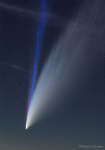 Three Tails of Comet NEOWISE
8.03.2021
What created the unusual red tail in Comet NEOWISE? Sodium. A spectacular sight back in the summer of 2020, Comet NEOWISE, at times, displayed something more than just a surprisingly striated white dust tail and a pleasingly patchy blue ion tail.
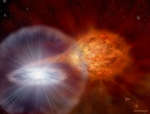 Explosions from White Dwarf Star RS Oph
22.08.2021
Spectacular explosions keep occurring in the binary star system named RS Ophiuchi. Every 20 years or so, the red giant star dumps enough hydrogen gas onto its companion white dwarf star to set off a brilliant thermonuclear explosion on the white dwarf's surface.
|
January February March April May June July August September October |
|||||||||||||||||||||||||||||||||||||||||||||||||