
|
You entered: distance
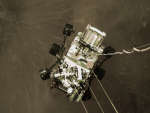 Perseverance: How to Land on Mars
20.02.2021
Slung beneath its rocket powered descent stage Perseverance hangs only a few meters above the martian surface, captured here moments before its February 18 touchdown on the Red Planet. The breath-taking view followed an intense seven minute trip from the top of the martian atmosphere.
 Apollo 11: Earth, Moon, Spaceship
3.05.2021
After the most famous voyage of modern times, it was time to go home. After proving that humanity has the ability to go beyond the confines of planet Earth, the first humans to walk...
 The NGC 6914 Complex
7.07.2022
A study in contrasts, this colorful skyscape features stars, dust, and glowing gas in the vicinity of NGC 6914. The interstellar complex of nebulae lies some 6,000 light-years away, toward the high-flying northern constellation Cygnus and the plane of our Milky Way Galaxy.
 The Seagull Nebula
19.01.2023
A broad expanse of glowing gas and dust presents a bird-like visage to astronomers from planet Earth, suggesting its popular moniker - The Seagull Nebula. Using narrowband image data, this 3-panel mosaic of the cosmic...
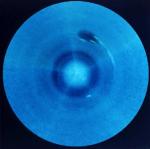 Southern Neptune
27.06.1998
Neptune, the Solar System's outermost gas giant planet, is 30 times farther from the Sun than Earth. Twelve years after a 1977 launch, Voyager 2 flew by Neptune and found surprising activity on a planet that receives only 3 percent as much sunlight as Jupiter.
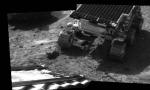 Sojourner On Mars
7.07.1997
The six wheeled robot rover Mars Sojourner rolled onto the martian surface on July 5th (Sol 2) at about 10:40 PM Pacific Daylight Time. This image confirms that its descent down the lander's rear deployment ramp was successful.
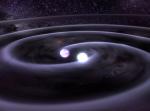 White Dwarf Star Spiral
1.06.2005
About 1,600 light-years away, in a binary star system fondly known as J0806, two dense white dwarf stars orbit each other once every 321 seconds. Interpreting x-ray data from the Chandra Observatory astronomers argue that the stars' already impressively short orbital period is steadily getting shorter as the stars spiral closer together.
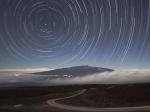 Star Trails Above Mauna Kea
20.12.2005
Is there a road to the stars? Possibly there are many, but the physical road pictured above leads up to the top of a dormant volcano that is a premier spot on planet Earth for observing stars and astronomical phenomena.
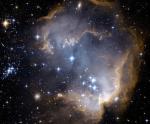 NGC 602 and Beyond
10.01.2007
Near the outskirts of the Small Magellanic Cloud, a satellite galaxy some 200 thousand light-years distant, lies 5 million year young star cluster NGC 602. Surrounded by natal gas and dust, NGC 602 is featured in this stunning Hubble image of the region.
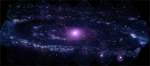 Ultraviolet Andromeda
17.09.2009
Taken by a telescope onboard NASA's Swift satellite, this stunning vista represents the highest resolution image ever made of the Andromeda Galaxy (aka M31) - at ultraviolet wavelengths. The mosaic is composed of 330 individual images covering a region 200,000 light-years wide.
|
January February March April May June July August September October |
|||||||||||||||||||||||||||||||||||||||||||||||||