
|
You entered: telescope
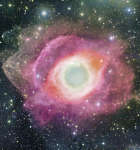 The Helix Nebula from CFHT
24.11.2020
Will our Sun look like this one day? The Helix Nebula is one of brightest and closest examples of a planetary nebula, a gas cloud created at the end of the life of a Sun-like star.
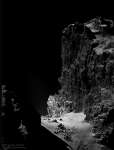 A High Cliff on Comet Churyumov Gerasimenko
28.11.2021
This high cliff occurs not on a planet, not on a moon, but on a comet. It was discovered to be part of the dark nucleus of Comet Churyumov-Gerasimenko (CG) by Rosetta, a robotic spacecraft launched by ESA that rendezvoused with the Sun-orbiting comet in 2014.
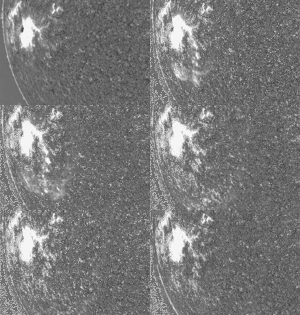 A Large Tsunami Shock Wave on the Sun
22.05.2022
Tsunamis this large don't happen on Earth. During 2006, a large solar flare from an Earth-sized sunspot produced a tsunami-type shock wave that was spectacular even for the Sun. Pictured here, the tsunami...
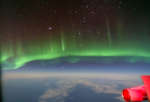 SOFIA s Southern Lights
29.07.2022
SOFIA, the Stratospheric Observatory for Infrared Astronomy, is a Boeing 747SP aircraft modified to carry a large reflecting telescope into the stratosphere. The ability of the airborne facility to climb above about 99 percent of Earth's infrared-blocking atmosphere has allowed researchers to observe from almost anywhere over the planet.
 The Deep Field
24.01.1996
The image above is part of the Hubble Deep Field and represents humanity's most distant yet optical view of the Universe. Galaxies like colorful pieces of candy fill the field, some as faint as 30th magnitude (about four billion times fainter than stars visible to the unaided eye).
 Irregular Moons Discovered Around Uranus
3.11.1997
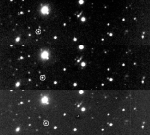
Where did these two irregular moons of Uranus originate? Last week two previously undiscovered moons of the distant gas planet were confirmed, the first in irregular orbits. All fifteen previously known moons of Uranus are 'regular', circling near the planet's equator. Most of these were discovered by the passing Voyager 2 spacecraft in 1986.
 The Radio Sky: Tuned to 408MHz
14.12.1997
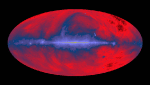
Tune your radio telescope to 408MHz (408 million cycles per second) and check out the Radio Sky! You should find that frequency on your dial somewhere between US broadcast television channels 13 and 14.
 A Picturesque Venus Transit
23.06.2004
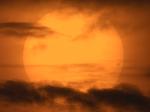
The rare transit of Venus across the face of the Sun earlier this month was one of the better-photographed events in sky history. Both scientific and artistic images have been flooding in from the areas that could see the transit: Europe and much of Asia, Africa, and North America.
 Denizen of the Tarantula Nebula
7.04.1999
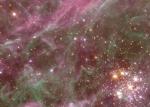
The star cluster at lower right, cataloged as Hodge 301, is a denizen of the Tarantula Nebula. An evocative nebula in the southern sky, the sprawling cosmic Tarantula is an energetic star forming region some 168,000 light-years distant in our neighboring galaxy the Large Magellanic Cloud.
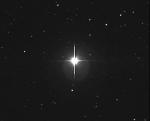 Introducing Nova Velorum 1999
24.05.1999
A bright nova was discovered Saturday that is currently visible to the unaided eye in southern skies. Nova Velorum 1999 was recorded near visual magnitude 3 independently by discoverers Peter Williams and Alan C. Gilmore (Mt. John U. Obs.), making it more luminous than many famous bright stars.
|
January February March April May June July August September October |
|||||||||||||||||||||||||||||||||||||||||||||||||