
|
You entered: light
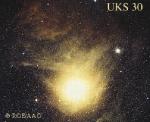 Antares
26.07.1998
Antares is a huge star. In a class called red supergiant, Antares is about 700 times the diameter of our own Sun, 15 times more massive, and 10,000 times brighter. Antares is the brightest star in the constellation of Scorpius and one of the brighter stars in all the night sky.
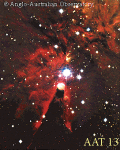 A Mysterious Cone Nebula
1.03.1996
Sometimes the simplest shapes are the hardest to explain. For example, the origin of the mysterious cone-shaped region located just below the center of the above picture remains a mystery. The dark region clearly contains much dust which blocks light from the emission nebula and open cluster NGC 2264 behind it.
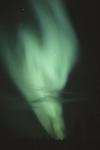 Aurora in the Night
31.10.2002
For much of the month of October, traveling shock waves from the Sun and solar wind gusts have buffeted planet Earth's magnetosphere. As a result, skywatchers at high latitudes in the northern hemisphere were treated to many displays of the aurora borealis or northern lights.
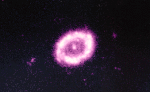 Starburst Galaxy M94
16.10.1995
The spiral galaxy M94 is somewhat unusual in that it shows a great ring of bright young stars particularly apparent when observed in ultraviolet light, as shown above. Such a high abundance of these young blue stars may cause a galaxy to be designated a starburst galaxy.
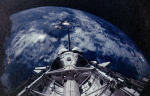 Lightning Below
2.12.1995
In May of 1993, the Space Shuttle Columbia orbited the Earth carrying the Spacelab Deutsche 2 (SL-D
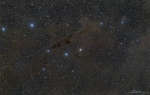 Barnard 228: The Dark Wolf Nebula in Lupus
26.07.2018
These dark markings on the sky can just be found in silhouette against a rich, luminous background of stars. Seen toward the southern constellation of Lupus the Wolf, the dusty, obscuring clouds are part of the Lupus Molecular Cloud some 500 light-years distant.
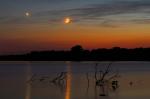 Planets over Pony Express Lake
18.07.2007
Beautiful sunset sky colors are reflected in Pony Express Lake in this twilight skyview from northern Missouri, USA, planet Earth. Recorded on Monday, a two day old crescent Moon and brilliant planet Venus shine through thin clouds.
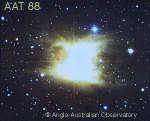 The Toby Jug Nebula
5.01.1996
Is the only thing unusual about this nebula its shape? Pictured above is the IC 2220 - the Toby Jug Nebula - a reflection nebula surrounding a normal red giant star. Reflection nebulae shine by light reflected from the central star(s).
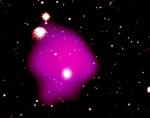 Hot Gas and Dark Matter
4.04.1999
Is the gravity of the galaxies seen in this image high enough to contain the glowing hot gas? Superposed on an optical picture of a group of galaxies is an image taken in X-ray light.
 Earths Major Telescopes Investigate GRB 130427A
8.05.2013
A tremendous explosion has occurred in the nearby universe and major telescopes across Earth and space are investigating. Dubbed GRB 130427A, the gamma-ray burst was first seen by the Earth-orbiting Swift satellite in high energy X-rays and quickly reported down to Earth.
|
January February March April May June July August September October |
|||||||||||||||||||||||||||||||||||||||||||||||||