
|
You entered: NASA
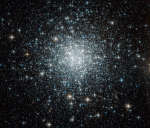 Globular Star Cluster NGC 6934
9.10.2010
Globlular star clusters roam the halo of our Milky Way Galaxy. Gravitationally bound, these spherical groupings of typically several hundred thousand stars are ancient, older than the stars of the galactic disk. In fact...
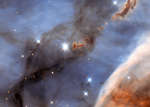 Evaporating Blobs of the Carina Nebula
23.04.2012
No, they are not alive -- but they are dying. The unusual blobs found in the Carina nebula, some of which are seen floating on the upper right, might best be described as evaporating. Energetic light and winds from nearby stars are breaking apart the dark dust grains that make the iconic forms opaque.
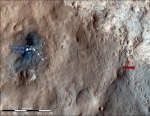 Curiosity on the Move
10.09.2012
Curiosity is on the move across Mars -- but where is it going? The car-sized rover's path after 29 Martian days on the surface is shown on the above map. Curiosity is still almost...
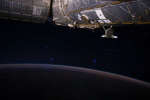 Orion Arising
28.06.2014
Orion's belt runs just along the horizon, seen through Earth's atmosphere and rising in this starry snapshot from low Earth orbit on board the International Space Station. The belt stars, Alnitak, Alnilam...
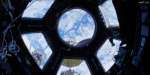 ISS Fisheye Flythrough
5.11.2016
Shot in Ultra HD, this stunning video can take you on a tour of the International Space Station. A fisheye lens with sharp focus and extreme depth of field provides an immersive visual experience of life in the orbital outpost.
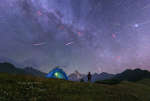 Meteors over Four Girl Mountains
13.12.2016
On some nights it rains meteors. Peaking over the next two nights, asteroid dust is expected to rain down on Earth during the annual Geminids meteor shower. This year, unfortunately, fainter Geminids will be harder to see because of the brightness of the Long Nights Full Moon, which occurs Wednesday.
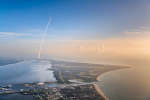 Mars 2020 from 5,000 Feet
31.07.2020
On Thursday this snapshot from a small plane 5,000 feet above Florida's Space Coast caught a rocket's trail rising into the blue morning sky. It was July's third launch of a mission from planet Earth bound for Mars.
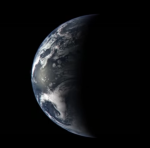 Leaving Earth
9.08.2022
What it would look like to leave planet Earth? Such an event was recorded visually in great detail by the MESSENGER spacecraft as it swung back past the Earth in 2005 on its way in toward the planet Mercury. Earth can be seen rotating in this time-lapse video, as it recedes into the distance.
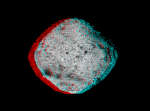 3D Bennu
11.03.2023
Put on your red/blue glasses and float next to asteroid 101955 Bennu. Shaped like a spinning toy top with boulders littering its rough surface, the tiny Solar System world is about one Empire State Building (less than 500 meters) across.
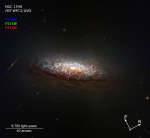 Hubble s NGC 1546
21.06.2024
Returning to science operations on June 14, the Hubble Space Telescope used its new pointing mode to capture this sharp image of spiral galaxy NGC 1546. A member of the Dorado galaxy group, the island universe lies a mere 50 million light-years away.
|
January February March April May June July August September October |
|||||||||||||||||||||||||||||||||||||||||||||||||