
|
You entered: Moon
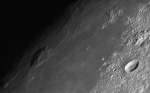 Mons Rumker in the Ocean of Storms
5.12.2020
Mons Rumker, a 70 kilometer wide complex of volcanic domes, rises some 1100 meters above the vast, smooth lunar mare known as Oceanus Procellarum, the Ocean of Storms. Daylight came to the area late last month.
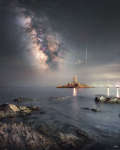 Meteor and Milky Way over the Mediterranean
23.08.2022
Careful planning made this a nightscape to remember. First, the night itself was chosen to occur during the beginning of this year's Perseid Meteor Shower. Next, the time of night was chosen to be before the bright Moon would rise and dominate the night sky's brightness.
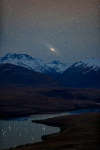 Andromeda in Southern Skies
21.10.2022
Looking north from southern New Zealand, the Andromeda Galaxy never gets more than about five degrees above the horizon. As spring comes to the southern hemisphere, in late September Andromeda is highest in the sky around midnight though.
 APOD: 2024 February 21 Б Seagull Nebula over Pinnacles Peak
21.02.2024
The bird is bigger than the peak. Nicknamed for its avian shape, the Seagull Nebula is an emission nebula on the night sky that is vast, spanning an angle over five times the diameter of the full moon and over 200 light years.
 Painting with Jupiter
19.04.2025
In digital brush strokes, Jupiter's signature atmospheric bands and vortices were used to form this interplanetary post-impressionist work of art. The creative image from citizen scientist Rick Lundh uses data from the Juno spacecraft's JunoCam.
 APOD: 2025 July 10 Б Lynds Dark Nebula 1251
10.07.2025
Stars are forming in Lynds Dark Nebula (LDN) 1251. About 1,000 light-years away and drifting above the plane of our Milky Way galaxy, LDN 1251 is also less appetizingly known as "The Rotten Fish Nebula." The dusty molecular cloud is part of a complex of dark nebulae mapped toward the Cepheus flare region.
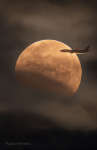 APOD: 2026 September 1 Б A Plane Lunar Eclipse
1.09.2026
Did you need to be on the right side of this airplane to see this eclipse? No. Lunar eclipses are routinely seen from the half of the Earth facing the Moon when the eclipse occurs, making them some of the most commonly witnessed astronomical events.
 Apollo 16: Exploring Plum Crater
7.06.1996
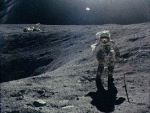
Apollo 16 spent three days on Earth's Moon in April 1972. The fifth lunar landing mission out of six, Apollo 16 was famous for deploying and using an ultraviolet telescope as the first lunar observatory, and for collecting rocks and data on the mysterious lunar highlands. In the above picture, astronaut John W.
 Jupiter and Venus at Sunrise
8.11.2004
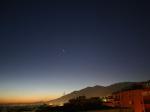
What are those bright objects in the morning sky? Early morning dog walkers, among many others across our world's Northern Hemisphere, have likely noticed tremendously bright Venus hanging in the eastern sky just before sunrise. Looking a bit like an approaching airplane, Venus holds its place in the sky and never seems to land.
 NGC 2174: Emission Nebula in Orion
8.12.2006
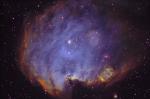
A lesser known sight in the nebula-rich constellation Orion, NGC 2174 can be found with binoculars near the head of the celestial hunter. About 6,400 light-years distant, the glowing cosmic cloud surrounds loose clusters of young stars.
|
January February March April May June July August September October |
|||||||||||||||||||||||||||||||||||||||||||||||||