
|
You entered: NASA
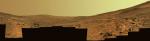 McCool Hill on Mars
15.03.2006
You can make it. Winter is rapidly advancing on the southern hemisphere on Mars, and the lack of sunlight could be dangerous unless you find a good place to hibernate. There it is ahead: McCool Hill.
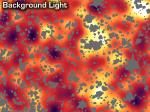 Light from the First Stars
2.01.2007
What were the first stars like? No one is yet sure. Our Sun is not a first-generation star. It is not even second generation. The first stars to appear in the universe likely came and went about 13 billion years ago.
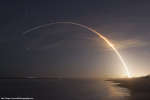 Atlas V Launches MMS
22.03.2015
Birds don't fly this high. Airplanes don't go this fast. The Statue of Liberty weighs less. No species other than human can even comprehend what is going on, nor could any human just a millennium ago. The launch of a rocket bound for space is an event that inspires awe and challenges description.
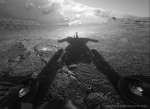 Shadow of a Martian Robot
28.03.2015
What if you saw your shadow on Mars and it wasn't human? Then you might be the Opportunity rover currently exploring Mars. Opportunity has been exploring the red planet since early 2004, finding evidence of ancient water, and sending breathtaking images across the inner Solar System.
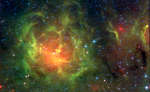 Infrared Trifid
25.07.2015
The Trifid Nebula, also known as Messier 20, is easy to find with a small telescope, a well known stop in the nebula rich constellation Sagittarius. But where visible light pictures show the nebula...
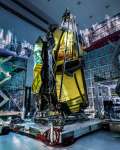 JWST: Ghosts and Mirrors
18.03.2017
Ghosts aren't actually hovering over the James Webb Space Telescope. But the lights are out as it stands with gold tinted mirror segments and support structures folded in Goddard Space Flight Center's Spacecraft Systems Development and Integration Facility clean room.
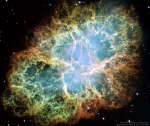 M1: The Crab Nebula from Hubble
9.09.2018
This is the mess that is left when a star explodes. The Crab Nebula, the result of a supernova seen in 1054 AD, is filled with mysterious filaments. The filaments are not only tremendously...
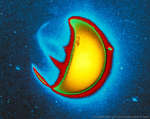 Ultraviolet Earth from an Observatory on the Moon
28.10.2018
Which planet is this? Earth. The featured false color picture shows how the Earth shines in ultraviolet (UV) light. The image is historic because it was taken from the surface of the Moon by humanity's only lunar observatory.
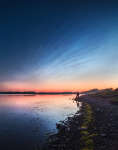 The Veins of Heaven
19.06.2020
Transfusing sunlight through a darkened sky, this beautiful display of noctilucent clouds was captured earlier this week, reflected in calm waters from Nykobing Mors, Denmark. From the edge of space, about 80 kilometers above...
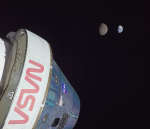 Artemis 1: Flight Day 13
1.12.2022
On flight day 13 (November 28) of the Artemis 1 mission the Orion spacecraft reached its maximum distance from Earth. In fact, over 430,000 kilometers from Earth its distant retrograde orbit also put Orion nearly 70,000 kilometers from the Moon.
|
January February March April May June July August September October |
|||||||||||||||||||||||||||||||||||||||||||||||||