
|
You entered: astronomer
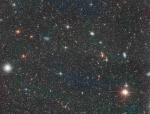 The Andromeda Deep Field
19.05.2003
What can you learn from looking into the depths of space? In an effort to find out true ages of stars in neighboring Andromeda galaxy's halo, astronomers stared into the galaxy giant with the new Advanced Camera for Surveys through the Hubble Space Telescope.
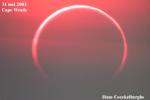 Ring of Fire from Cape Wrath
5.06.2003
If the Moon's apparent diameter is not quite large enough to cover the Sun during a solar eclipse, an annular eclipse can be the result -- a spectacle of silhouetted Moon surrounded by a solar "ring of fire".
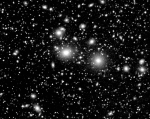 The Perseus Cluster of Galaxies
26.04.1997
Here is one of the largest objects that anyone will ever see on the sky. Each of the fuzzy blobs in the above picture is a galaxy, together making up the Perseus Cluster, one of the closest clusters of galaxies.
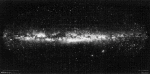 7,000 Stars and the Milky Way
17.05.1997
This panorama view of the sky is really a drawing. It was made in the 1940s under the supervision of astronomer Knut Lundmark at the Lund Observatory in Sweden. To create the picture, draftsmen...
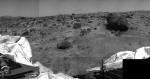 A Martian Day's End
6.07.1997
A Day or "Sol" on Mars is only 40 minutes longer than an Earth day - and Pathfinder's first day on Mars, Sol 1 according to its local calendar, was an eventful one. Still...
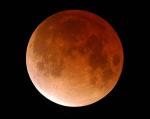 Sunset Moonlight
21.11.2003
November's lunar eclipse was one of the shortest in recent years and also one of the brightest -- demonstrating that the Earth's shadow is not completely dark. The eclipsed Moon remained easily visible...
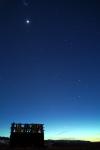 Mercury and Venus in the West
2.04.2004
Doing their part in the ongoing dance of the planets, Mercury and Venus both reached their greatest elongation or maximum apparent distance from the Sun only a few days ago, on March 29th. Eager...
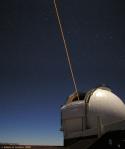 A Telescope Laser Creates an Artificial Star
7.02.2005
What do you get when you combine one of the world's most powerful telescopes with a powerful laser? An artificial star. Monitoring fluctuations in brightness of a genuine bright star can indicate how the Earth's atmosphere is changing, but many times no bright star exists in the direction where atmospheric information is needed.
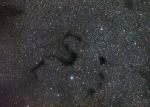 Snake in the Dark
21.05.2005
Dark nebulae snake across a gorgeous expanse of stars in this wide-field view toward the pronounceable constellation Ophiucus and the center of our Milky Way Galaxy. In fact, the central S-shape seen here is well known as the Snake Nebula.
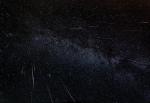 Raining Perseids
6.08.2005
Comet dust rained down on planet Earth last August, streaking through dark skies in the annual Perseid meteor shower. So, while enjoying the anticipated space weather, astronomer Fred Bruenjes recorded a series of many 30 second long exposures spanning about six hours on the night of August 11/12 using a wide angle lens.
|
January February March April May June July August |
||||||||||||||||||||||||||||||||||||||||||||||||||||||||