
|
You entered: NASA
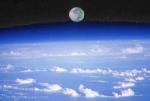 Moonrise, Planet Earth
27.05.1997
During the Astro-1 astronomy mission of December, 1990, Space Shuttle astronauts photographed this stunning view of the full moon rising above the Earth's limb. In the foreground, towering clouds of condensing water vapor mark the extent of the troposphere, the lowest layer of the planet's life-sustaining atmosphere.
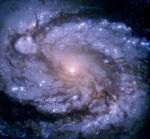 M100: A Grand Design
1.06.1997
Majestic on a truly cosmic scale, M100 is appropriately known as a Grand Design spiral galaxy. A large galaxy of over 100 billion or so stars with well defined spiral arms, it is similar to our own Milky Way.
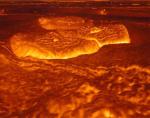 Venus' Once Molten Surface
3.06.1997
If you could look at Venus with radar eyes - this is what you might see. This computer reconstruction of the surface of Venus was created from data from the Magellan spacecraft. Magellan orbited Venus and used radar to map our neighboring planet's surface between 1990 and 1994.
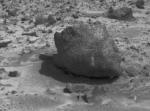 Yogi Rock
11.07.1997
This portrait of Yogi Rock, a now famous boulder on Mars, was recorded on Sol 3 by the Imager for Mars Pathfinder (IMP). Big and friendly looking like its Earth cartoon namesake Yogi Bear, Yogi Rock is a prominent visible feature at the Pathfinder landing site.
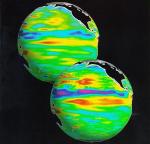 El Nino Water Rhythm
13.01.1998
This year's El Niño is the strongest ever recorded. The large amount of warm water in the Pacific Ocean near the equator is causing unusual weather all over planet Earth.
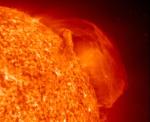 Erupting Sun
18.09.1997
On August 27th twisting magnetic fields propelled this huge eruptive prominence a hundred thousand miles above the Sun's surface. The seething plasma of ionized gases is at a temperature of about 150,000 degrees Farenheit and spans over 200,000 miles (about 27 Earths).
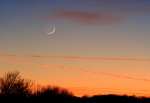 Mercury Chases the Sunset
12.01.2008
This colorful view of the western sky at sunset features last Wednesday's slender crescent Moon. Of course, when the Moon is in its crescent phase it can never be far from Sun in the sky.
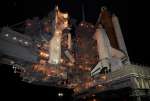 Atlantis on Pad 39A
9.02.2008
An intricate network of lighting plays across the 130 foot high Rotating Service Structure (RSS) in this dramatic night view of the Space Shuttle Atlantis on the Kennedy Space Center's launch pad 39A. Seen here after rolling back before Thursday's shuttle launch, the RSS provides pre-launch access to the orbiter and its payload.
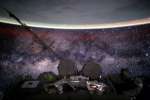 Earth and Milky Way from Space
7.11.2015
Since November 2000, people have been living continuously on the International Space Station. To celebrate humanity's 15th anniversary off planet Earth, consider this snapshot from space of our galaxy and our home world posing together beyond the orbital outpost.
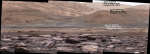 Curiosity Surveys Lower Mount Sharp on Mars
28.12.2016
If you could stand on Mars -- what might you see? If you were the Curiosity rover, then just last month you would have contemplated the featured image -- a breathtaking panorama of the lower portion of Mount Sharp. The colors have been adjusted to mimic lighting familiar to Earthlings.
|
January February March April May June July August September October |
|||||||||||||||||||||||||||||||||||||||||||||||||