
|
You entered: NASA
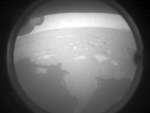 Mars Perseverance Sol 0
19.02.2021
After a 203 day interplanetary voyage, and seven minutes of terror, Perseverance has landed on Mars. Confirmation of the successful landing at Jezero crater was announced from mission control at NASAБs Jet Propulsion Laboratory in Southern California at 12:55 pm PST on February 18.
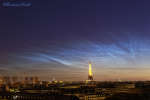 Noctilucent Clouds over Paris
12.07.2022
It's northern noctilucent cloud season. Composed of small ice crystals forming only during specific conditions in the upper atmosphere, noctilucent clouds may become visible at sunset during late summer when illuminated by sunlight from below. Noctilucent clouds are the highest clouds known and now established to be polar mesospheric clouds observed from the ground.
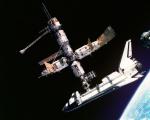 The Space Shuttle Docked with Mir
20.10.2002
Before there was the International Space Station, the reigning orbiting spaceport was Russia's Mir. Pictured above in 1995, the United States Space Shuttle Atlantis docked with the segmented Mir. During shuttle mission STS-71, astronauts answered questions from school students over amateur radio and performed science experiments aboard Spacelab.
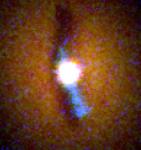 The Center of NGC 6251 is Glowing
12.09.1997
Something is lighting up the center of galaxy NGC 6251. Leading speculation holds that it is a large black hole not shrouded by gas and dust typically found near the center of a galaxy.
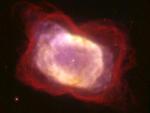 Planetary Nebula NGC 7027 in Infrared
25.03.1998
NGC 7027 is one of the smallest known planetary nebulae. Even so, NGC 7027 is 14,000 times larger than the Earth-Sun distance. Planetary nebula are so named because the first few discovered appeared similar to planets. Planetary nebula are actually dying stars, though, that have recently run out of nuclear fuel.
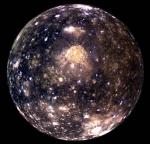 Callisto Enhanced
12.05.1998
Callisto is half rock and half ice. This moon of Jupiter is approximately the size of the planet Mercury, making it the third largest moon in the Solar System, after Ganymede and Titan. Callisto...
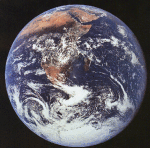 Welcome to Planet Earth
31.01.1999
Welcome to Planet Earth, the third planet from a star named the Sun. The Earth is shaped like a sphere and composed mostly of rock. Over 70 percent of the Earth's surface is water. The planet has a relatively thin atmosphere composed mostly of nitrogen and oxygen.
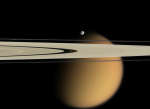 Titan Beyond the Rings
1.11.2014
When orbiting Saturn, be sure to watch for breathtaking superpositions of moons and rings. One such picturesque vista was visible recently to the robot Cassini spacecraft now orbiting Saturn. In 2006 April, Cassini captured Saturn's A and F rings stretching in front of cloud-shrouded Titan.
 Earth During a Total Eclipse of the Sun
17.03.2015
What does the Earth look like during a total solar eclipse? It appears dark in the region where people see the eclipse, because that's where the shadow of the Moon falls. The shadow...
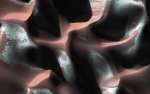 Martian Chiaroscuro
14.04.2018
Deep shadows create dramatic contrasts between light and dark in this high-resolution close-up of the martian surface. Recorded on January 24, 2014 by the HiRISE camera onboard the Mars Reconnaissance Orbiter, the scene spans about 1.5 kilometers.
|
January February March April May June July August September October |
|||||||||||||||||||||||||||||||||||||||||||||||||