
|
You entered: Observatory
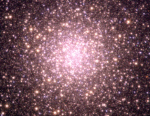 Globular Cluster M3
5.12.1996
This huge ball of stars predates our Sun. Long before mankind evolved, before dinosaurs roamed, and even before our Earth existed, ancient globs of stars condensed and orbited a young Milky Way Galaxy.
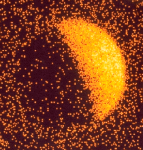 X-Raying the Moon
31.08.1995
Above is a picture of the Moon taken in X-rays by the Roentgen Observatory Satellite ROSAT in 1990. This famous picture shows three distinct regions: a bright X-ray sky, a bright part of the Moon, and a relatively dark part of the Moon.
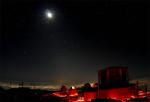 Moon Over Haleakala
10.06.2006
A waxing crescent Moon shines over the caldera of dormant volcano Haleakala and observatory domes in this dramatic view from above the clouds. Looking west from Maui, Hawaii on May 31st, the scene also records the lights of Honolulu on the horizon.
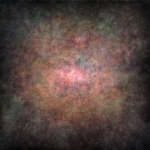 Median Mashup: Hubble s Top 100
13.09.2014
Now, as you sip your cosmic latte you can view 100 Hubble Space Telescope images at the same time. The popular scenes of the cosmos as captured from low Earth orbit are all combined into this single digital presentation. To make it, Hubble's top 100 images were downloaded and resized to identical pixel dimensions.
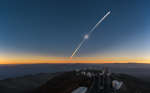 La Silla Eclipse Sequence
4.07.2019
The road to the high mountaintop La Silla Observatory in the Chilean Atacama Desert also led in to the path of July 2nd's total solar eclipse. Recorded at regular intervals before and after...
 Good Morning Moon
11.01.2024
Yesterday, the Moon was New. But on January 9, early morning risers around planet Earth were treated to the sight of an old Moon, low in the east as the sky grew bright before dawn.
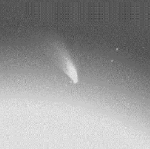 Comet Hyakutake Passes the Sun
16.05.1996
On May 1, Comet Hyakutake made its closest approach to the Sun. During this time it was not possible to view the comet with most astronomical instruments because of the brightness of the nearby Sun.
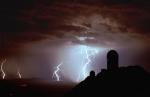 Lightning on Earth
17.07.2000
Nobody knows what causes lightning. It is known that charges slowly separate in some clouds causing rapid electrical discharges (lightning), but how electrical charges get separated in clouds remains a topic of much research.
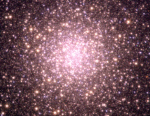 Globular Cluster M3
19.07.1998
This huge ball of stars predates our Sun. Long before mankind evolved, before dinosaurs roamed, and even before our Earth existed, ancient globs of stars condensed and orbited a young Milky Way Galaxy.
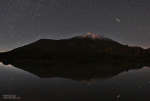 Teide Sky Trails
11.02.2010
The snow capped Teide volcano is reflected in a pool of water in this nearly symmetric night sky view from the Canary Island Tenerife. Bright north star Polaris stands above the peak in an exposure that also captures the brilliant trail of a polar orbiting Iridium satellite.
|
January February March April May June July August September October |
|||||||||||||||||||||||||||||||||||||||||||||||||