
|
You entered: NASA
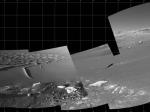 Mosaic of Endurance Crater on Mars
11.10.2004
Where should this Martian rover explore next? Possible choices for the Opportunity rover team on Earth in early August were to send the Martian robot inside Endurance crater toward the arc-shaped sand dunes...
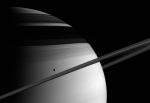 Tethys, Rings, and Shadows
22.07.2005
Seen from ice moon Tethys, rings and shadows would play across fantastic views of the Saturnian system. Haven't dropped in on Tethys lately? Then this gorgeous ringscape from the Cassini spacecraft will have to do for now.
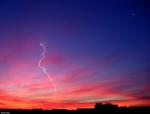 Minotaur Dawn
21.12.2006
Last Saturday, some colorful dawn skies along the US east coast featured the Moon and a Minotaur rocket climbing into low Earth orbit. The 7AM launch of the four stage Air Force Minotaur I rocket took place at NASA's Wallops Flight Facility on Virginia's eastern shore.
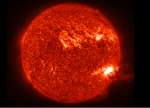 The Sun Unleashed: Monster Filament in Ultraviolet
9.04.2018
One of the most spectacular solar sights is an explosive flare. In 2011 June, the Sun unleashed somewhat impressive, medium-sized solar flare as rotation carried active regions of sunpots toward the solar limb. That...
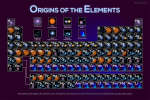 APOD: 2026 September 14 Б Where Your Elements Came From
14.09.2026
The hydrogen in your body and present in every molecule of water came from the Big Bang. There are no other appreciable sources of hydrogen in the universe. The carbon in your body was made by nuclear fusion in the interior of stars, as was the oxygen.
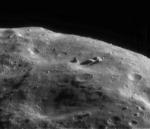 Eros Horizon View
25.05.2000
Since April 30, the robotic NEAR-Shoemaker spacecraft has been orbiting only 31 miles from asteroid Eros. Cruising over the asteroid's north and south poles at a leisurely 7 miles per hour, the spacecraft completes an orbit once every 1.2 earth days. This dramatic horizon view
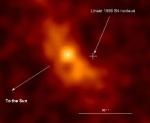 X-Rays from Comet LINEAR
1.08.2000
Why do comets emit X-rays? First discovered during the passing of Comet Hyakutake in 1996, the reason a cold comet would produce hot X-rays has since remained a mystery. On July 14, however...
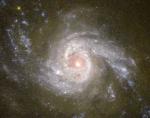 Spiral Galaxy NGC 3310 Across the Visible
11.09.2001
The party is still going on in spiral galaxy NGC 3310. Roughly 100 million years ago, NGC 3310 likely collided with a smaller galaxy causing the large spiral galaxy to light up with a tremendous burst of star formation.
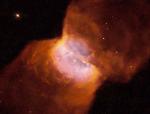 NGC 2346: A Butterfly-Shaped Planetary Nebula
28.10.2001
It may look like a butterfly, but it's bigger than our Solar System. NGC 2346 is a planetary nebula made of gas and dust that has evolved into a familiar shape. At the heart of the bipolar planetary nebula is a pair of close stars orbiting each other once every sixteen days.
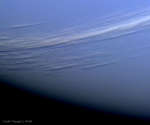 Two Hours Before Neptune
14.02.2015
Two hours before closest approach to Neptune in 1989, the Voyager 2 robot spacecraft snapped this picture. Clearly visible for the first time were long light-colored cirrus-type clouds floating high in Neptune's atmosphere. Shadows of these clouds can even be seen on lower cloud decks.
|
January February March April May June July August September October |
|||||||||||||||||||||||||||||||||||||||||||||||||